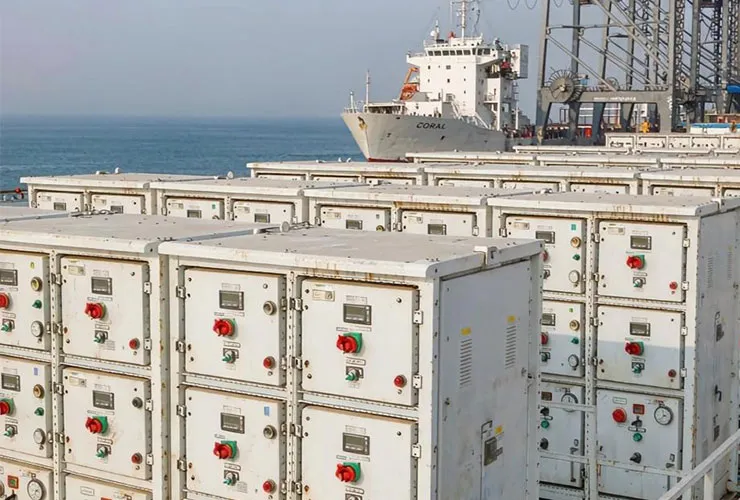
Project Overview
Funator delivered the outdoor MV kiosk line-up and Blokset LV distribution, engineered for C5-M marine duty and the regenerative load cycles of modern crane drives.
The Challenge
Ports are where switchgear goes to die — unless specified honestly:
- C5-M corrosion category: salt-laden atmosphere plus ore dust requires marine-grade coating systems, sealed enclosures and anti-condensation control.
- Crane duty cycling: regenerative drives push power back into the network, demanding switchgear and protection rated for bidirectional flow.
- Terminal schedule: the cranes had a fixed arrival date on a single vessel — the electrical infrastructure had to be tested and waiting.
The Solution
MVnex 36kV was supplied in outdoor kiosk form with C5-M coating systems, anti-condensation heaters and filtered ventilation. Blokset LV switchboards fed the crane busbars with active harmonic filter interfaces, and protection was configured for regenerative feedback with directional supervision on the feeder relays.
| Equipment | Qty / Configuration | Key Ratings |
|---|---|---|
| MVnex 36kV outdoor kiosks | 6 × kiosks | C5-M marine coating · IP54 · anti-condensation |
| Blokset LV switchboards | 18 × panels | Crane feeders · Form 4b · filter interface |
| Active harmonic filters | 4 × sets | THD compliance on regenerative crane bus |
| Reefer rack distribution | 8 × stations | Weatherproof · metering per rack row |
Execution & Delivery
- Months 1–3: kiosk design and coating-system certification; harmonic study for the crane drive profile.
- Months 4–6: factory assembly; salt-spray and coating-thickness certification documented for the port authority.
- Month 7: delivery timed to crane vessel arrival; installation and termination alongside crane rail works.
- Month 8: staged energization, crane load tests and SAT with the terminal operator.
Results
- All four cranes load-tested and accepted within a week of the vessel berthing.
- First monsoon season completed with zero corrosion findings at the annual inspection.
- Reefer capacity doubled as programmed, with per-rack metering feeding the terminal's billing system.
“Salt air destroys cheap switchgear in two years. After the first monsoon, this still looks new — and the coating certificates satisfied our port authority's surveyor.” — Chief Engineer, terminal operator
Explore the Renewable Energy solution
Configuration guidance, standards and product lineup for this industry.
Renewable Solution