01
Low Voltage Switchgear
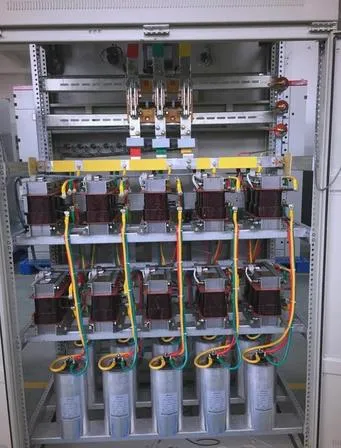
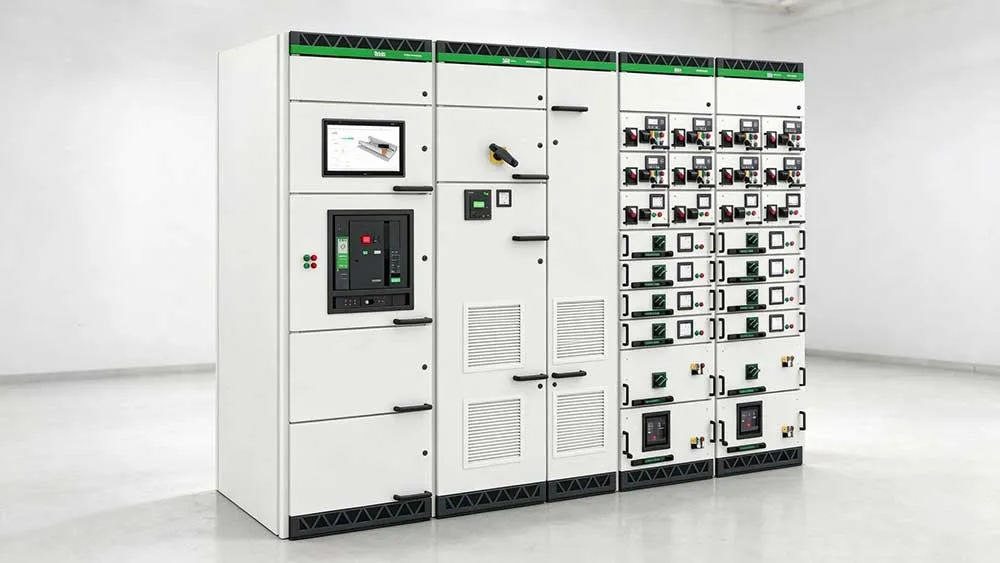
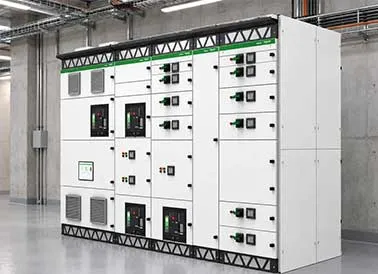
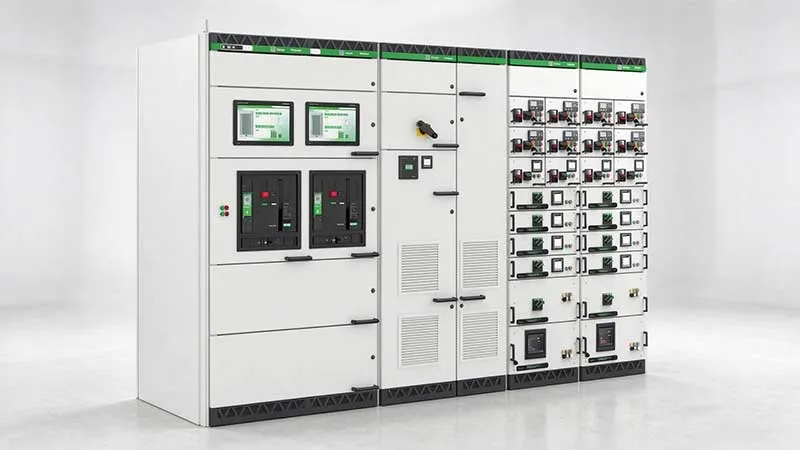
IEC 61439 BlokSeT Dc power factor correction panel (150-400kvar) by authorized Schneider panel builder. Fixed/auto steps, detuned reactors & BlokSeT D baying.
 In Stock
The Blokset DC model is a standardized reactive power compensation cabinet within Schneider Electric’s Blokset low-voltage switchgear system. It shares a completely uniform cabinet frame, busbar interfaces, and installation dimensions with the Blokset D-type feeder cabinet and Da-type ATS cabinet, allowing it to be directly assembled in parallel with the main distribution series. This ensures a consistent appearance for the entire substation’s switchgear room, shared spare parts, and standardized operation and maintenance procedures.
The cabinet features a fixed compartmentalized structure, internally divided into independent compartments for the busbar room, capacitor compartment, reactor compartment, and control and instrumentation room. It supports up to Form 3 compartmentalization, preventing the propagation of faults in a single circuit. The main busbars are made of tinned copper bars, verified for temperature rise at 1.1 times the rated current, ensuring ample operating margin in high-temperature environments.
Compensation units come standard with Schneider Electric’s original Varplus series low-voltage power capacitors, paired with thyristor or contactor switching elements, and support both fixed compensation and automatic cyclic switching modes. Equipped with a dedicated reactive power compensation controller, the system monitors the power factor in real time and switches capacitor circuits as needed, maintaining the system power factor at 0.95 or higher. Detuning reactors can be configured as needed to suppress characteristic harmonics such as the 3rd and 5th orders, preventing harmonic amplification and capacitor damage due to overcurrent, and making the system suitable for contaminated power grids containing variable-frequency drives and rectifier equipment.
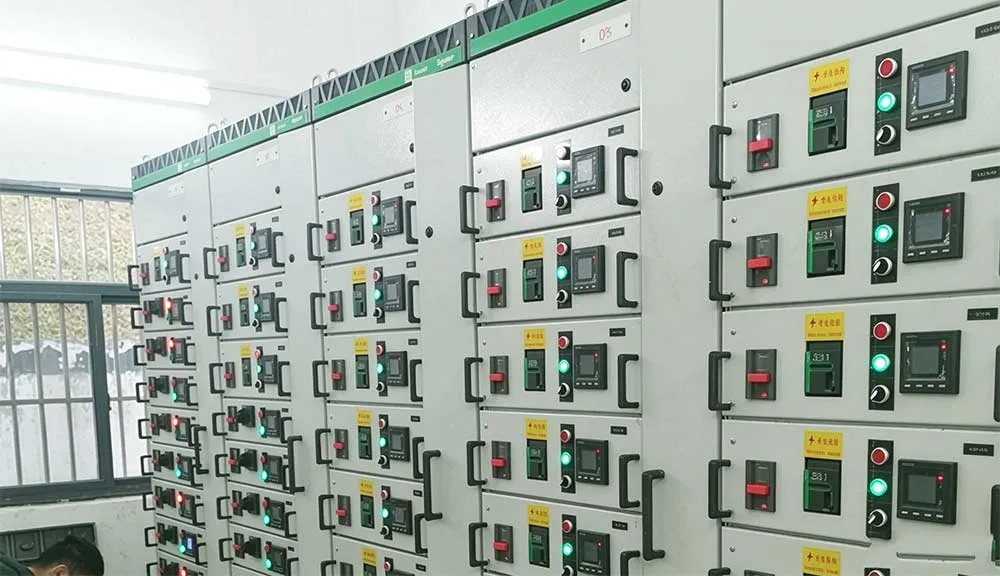
Blokset-LV-switchgear-on-site-commissioning-for-infrastructure-project
The entire series complies with the IEC 61439-1/2 and GB 7251.1 standards, has passed internal arc testing in accordance with IEC 61641, and can withstand seismic intensity up to 9 degrees. It is widely used in low-voltage power distribution scenarios requiring power factor correction and power quality optimization, such as industrial workshops, commercial buildings, municipal pumping stations, and data centers.
Field-assembled custom capacitor cabinets generally have three core safety hazards, which Blokset DC’s standardized factory design can directly resolve.
First, the cabinet frames of non-standard cabinets are generally not compatible with the main power distribution series. After assembly, they are often uneven in height, and busbar alignment errors are significant, which can easily lead to excessive contact resistance and abnormal temperature rises. Blokset DC has the exact same cabinet outline, busbar height, and door design as Blokset D feeder cabinets, allowing for direct parallel connection. Busbar alignment precision is ensured by specialized tooling, resulting in stable contact resistance and controllable temperature rises.
Second, off-the-shelf capacitor cabinets generally lack reactor matching calculations and ventilation/heat dissipation verification, making them prone to capacitor overcurrent bulging and accelerated aging due to heat buildup inside the cabinet under harmonic conditions. Blokset DC matches ventilation channels to standard capacities, and both natural and forced ventilation schemes have undergone temperature rise verification; reactor parameters are strictly matched to capacitors, and detuning is precisely controlled, thereby preventing harmonic amplification and overcurrent damage through design.
Third, non-standard capacitor cabinets often have chaotic switching logic and unreasonable switching increments, leading to frequent switching between over-compensation and under-compensation, which shortens the service life of capacitors and contactors. Blokset DC comes with an original manufacturer’s reactive power compensation controller that supports various switching logics, including cyclic and coded switching. The switching increments are optimized to precisely track load changes, reduce unnecessary switching, and extend the service life of components.
| Parameter | Specification |
|---|---|
| Rated Operating Voltage Ue | AC 400V / 690V, 50/60Hz |
| Rated Insulation Voltage Ui | AC 1000V |
| Rated Impulse Withstand Voltage Uimp | 12kV |
| Compensation Capacity Range | 150kvar ~ 400kvar per cabinet |
| Maximum Switching Steps | Up to 9 steps |
| Form Separation Rating | Up to Form 3 |
| Ventilation Mode | Natural ventilation / forced ventilation optional |
| Cabinet Dimensions (H×W×D) | 2200mm × 700/1100mm × 600/1000mm |
| Enclosure Protection Degree | IP30 ~ IP41 (indoor) |
| Seismic Rating | Grade 9 |
For custom power factor correction solutions using Schneider Blokset DC capacitor cabinets—including capacity matching, reactor configuration, and switching logic settings—contact our engineering team for a comprehensive proposal and quote.
The Blokset DC-type reactive power compensation cabinet supports fully flexible configuration. The compensation capacity of a single cabinet ranges from 150 kvar to 400 kvar, with up to 9 switching steps. Switching components can be either dedicated capacitor contactors or thyristor switching modules; Compensation modes include both fixed compensation and automatic cyclic switching, supported by a genuine Schneider Electric reactive power compensation controller that enables real-time power factor monitoring and multi-logic switching settings; 7% or 14% detuned reactors can be configured as needed to adapt to grid conditions with varying harmonic content, thereby mitigating the risk of harmonic amplification; Cabinet width options include the standard 700 mm model or the 1100 mm model with a reactor compartment, with depth options of 600 mm and 1000 mm; Ventilation options include natural ventilation or forced air cooling, and the protection rating can be upgraded from the standard IP30 to IP40 or IP41. Additionally, auxiliary components such as surge protectors, multifunctional power quality meters, and remote communication modules can be selected as needed to meet the power quality management requirements of different projects.
The Blokset DC-type reactive power compensation cabinet can address power factor correction scenarios across a wide range of low-voltage power distribution systems: In industrial workshops and manufacturing facilities, it can be directly connected to the main power distribution system via its standardized modular cabinet structure to provide reactive power compensation for inductive loads such as motors and fans, thereby reducing line losses and transformer apparent power. When paired with detuned reactors, it can adapt to harmonic conditions involving variable-frequency drives and rectifier equipment, preventing capacitor damage due to overcurrent; Commercial buildings and high-rise structures can integrate these cabinets into their facility-wide low-voltage power distribution systems to provide centralized compensation for mixed loads such as lighting and air conditioning, stabilizing the power factor at 0.95 or higher, reducing reactive power electricity costs, and ensuring a uniform cabinet appearance that meets the standardization requirements of high-end building electrical rooms; In applications such as municipal pump stations and wastewater treatment plants, the wide-temperature design and forced-ventilation solution can withstand the high-humidity, high-temperature environments of underground electrical rooms, while the automatic switching logic tracks fluctuating loads from pumps to achieve dynamic reactive power compensation; for small- and medium-sized data centers, high-precision thyristor switching solutions can be implemented to rapidly track changes in IT loads, preventing over- or under-compensation, and can be integrated with power quality meters to enable real-time monitoring of compensation performance and data upload.
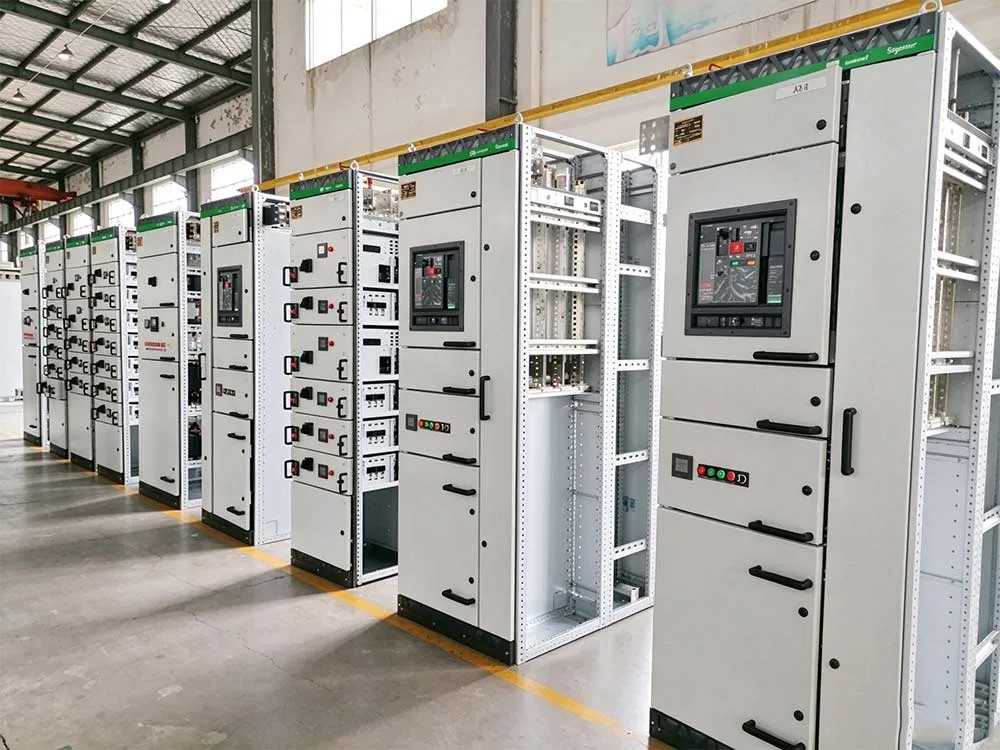
Schneider-Blokset-switchgear-finished-panels-in-authorized-assembly-workshop
Q1: Can Blokset DC cabinets be directly connected in parallel with Blokset D-type feeder cabinets?
A: Yes. The cabinet heights, busbar positions, and mounting hole locations are identical for both types. No transition cabinets are required; they can be directly bolted together to form a continuous row of switchgear, ensuring a unified appearance and consistent operation and maintenance standards for the entire substation.
Q2: What is the maximum compensation capacity for a single cabinet?
A: The maximum compensation capacity for a standard 1100mm-wide cabinet is 400 kvar. For higher capacity requirements, a multi-cabinet parallel configuration can be used, with unified busbar connections, allowing for flexible capacity expansion.
Q3: Under what circumstances is it necessary to install reactors?
A: When the system contains nonlinear loads such as variable-frequency drives, rectifiers, or UPS units, and characteristic harmonics (such as 3rd and 5th order) are present, detuned reactors must be installed to prevent harmonic amplification from causing overcurrent, overheating, and damage to the capacitors. Common detuning levels are 7% and 14%, which can be selected based on the harmonic content.
Q4: How do you choose between contactor and thyristor switching methods?
A: For applications with stable loads and low switching frequency, select contactor switching for lower cost; for applications with rapidly fluctuating loads and frequent switching, select thyristor switching for faster response, no inrush current, and longer component life.
Q5: At what level can the power factor of the compensation cabinet be stabilized?
A: Provided the configuration is appropriate, the system power factor can be stabilized between 0.92 and 0.98 in automatic switching mode. The standard target value is 0.95, which can be flexibly adjusted via the controller.
Q6: Is the cabinet’s protection rating suitable for outdoor use?
A: The base Blokset DC is designed for indoor use and cannot be used directly outdoors; for outdoor applications, it can be equipped with an outdoor rainproof enclosure, while retaining the standard Blokset DC cabinet interior, thereby upgrading the protection rating to IP54.
Catalogs, CAD drawings and manuals are free — leave your work email and we send the package within 12 hours.
Where Blokset Dc delivers — typical on-site installations across industries and regions.
01
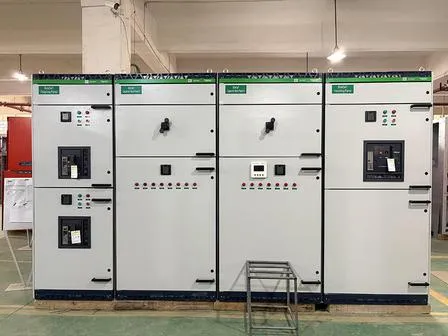
02
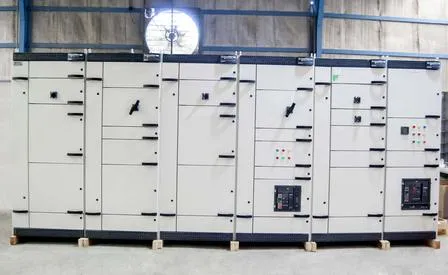
03
Related Products
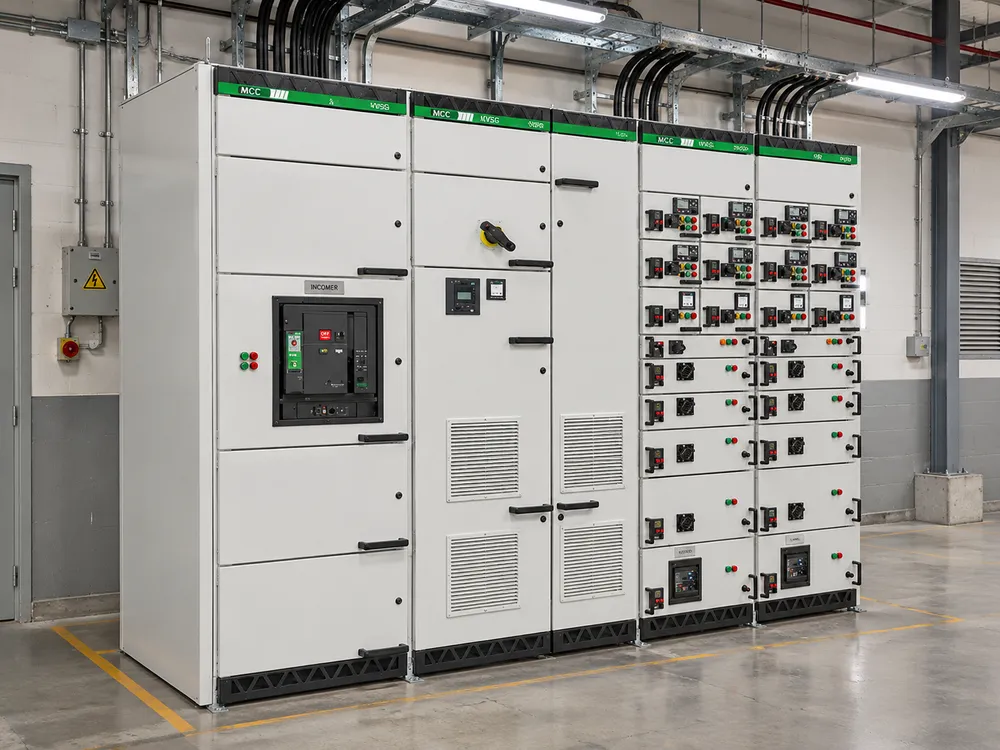 In Stock
Low Voltage Switchgear
400 V AC · Up to 5000 A · Horizontal Busbar: Up to 100 kA / 1s; Vertical Busbar: Up to 65 kA / 1s
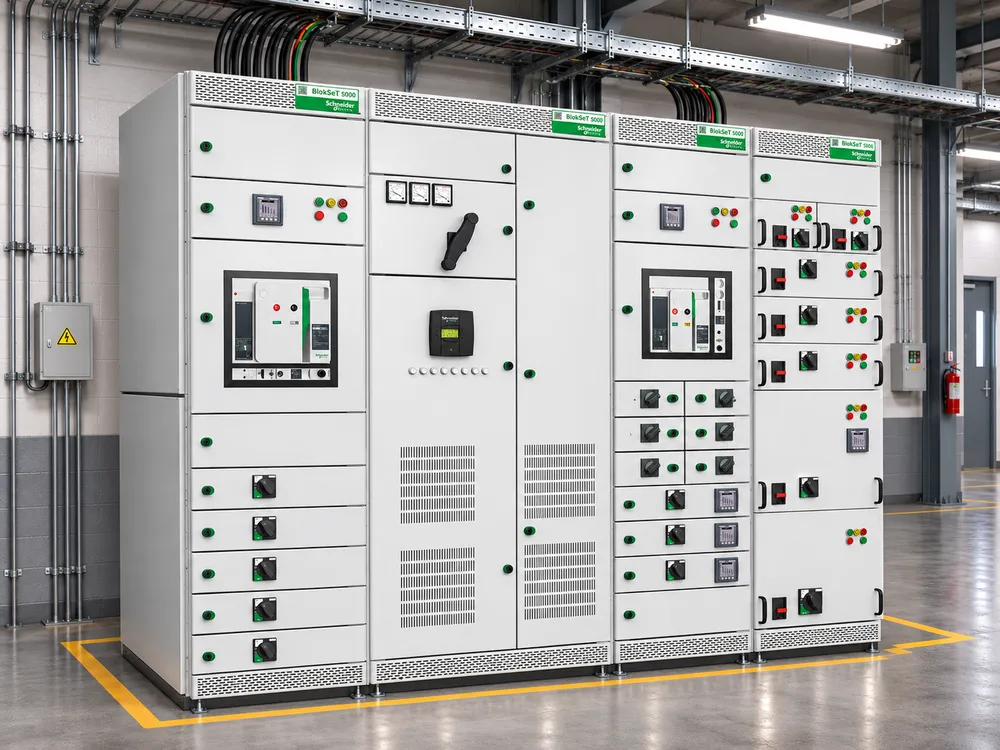 In Stock
 In Stock
 In Stock
Low Voltage Switchgear
AC 400V / 690V,50/60Hz · 6,300 A · up to 100 kA / 1 s
Inquiry