Introduction
Sulfur hexafluoride (SF6) has been widely used as an insulation and arc-quenching medium in traditional medium voltage switchgear. Its high dielectric strength and excellent arc-extinguishing properties make it suitable for ring main units (RMUs), gas-insulated switchgear and substation equipment.
However, SF6 has a significant environmental impact. When released into the atmosphere through equipment leakage, it contributes to global warming. According to Schneider Electric, SF6 has a Global Warming Potential (GWP) approximately 24,300 times higher than that of CO2.
As the power industry places greater emphasis on carbon reduction and environmental compliance, more utilities, industrial companies and project owners are specifying SF6-free switchgear in their procurement requirements.
SF6-free switchgear refers to electrical switchgear that does not use sulfur hexafluoride as an insulation or switching medium. Depending on the technology, alternative solutions may use pure air, vacuum, solid insulation or other validated insulation and switching technologies.
Among these alternatives, pure air insulation combined with vacuum interruption has become an important technology direction for medium voltage switchgear.
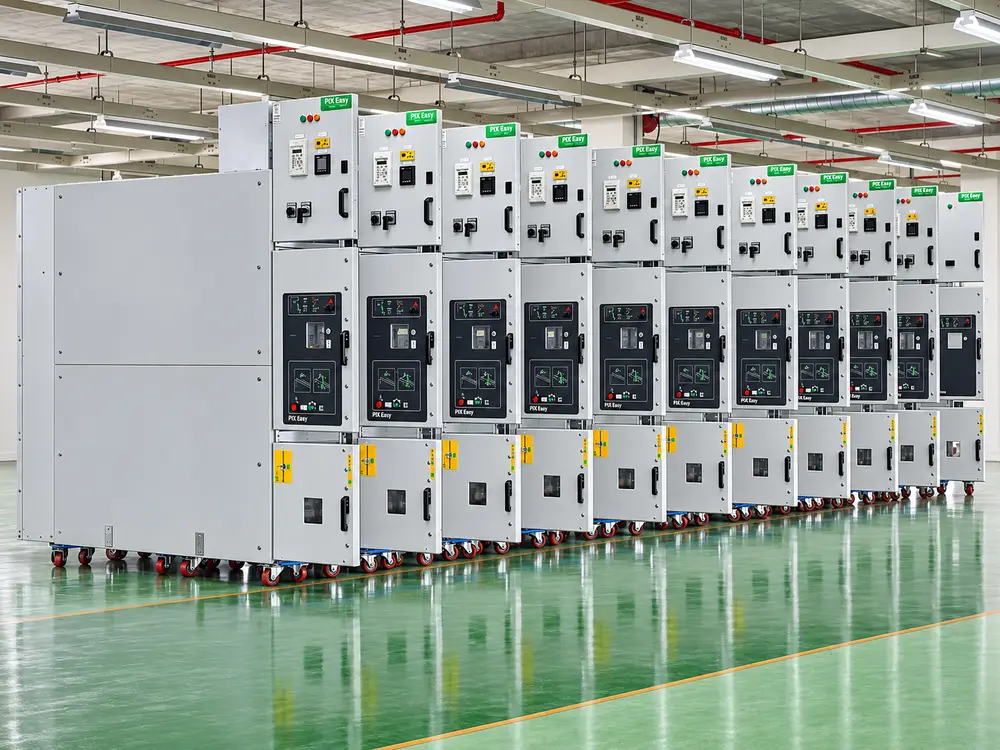
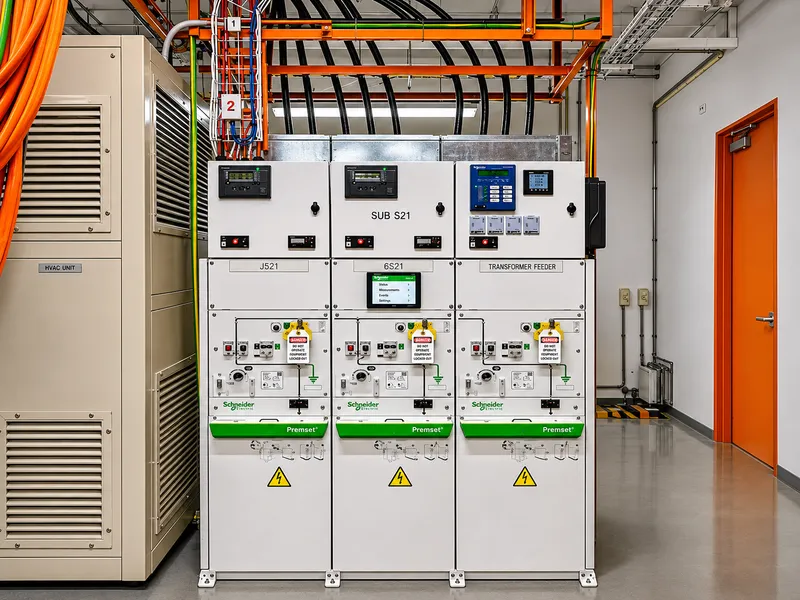
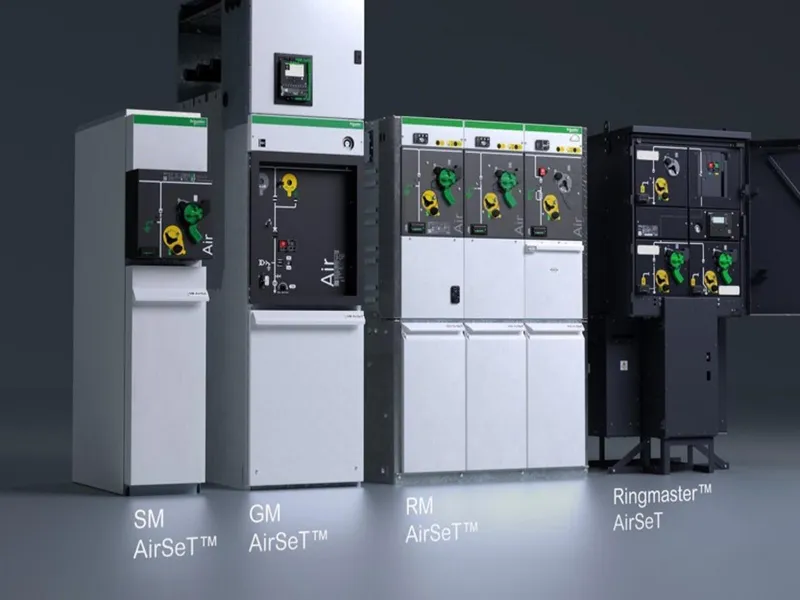
Schneider Electric's RM AirSeT, SM AirSeT and GM AirSeT product ranges are representative examples of medium voltage switchgear using pure air insulation and vacuum technology.
This article explains how SF6-free switchgear works, its practical advantages, the impact of EU regulations and the key considerations for selecting this equipment.
1. Why Has SF6 Been Used in Traditional Medium Voltage Switchgear?
Before examining SF6-free technology, it is important to understand the role of SF6 in conventional switchgear.
SF6 is a gas with high dielectric strength and excellent arc-quenching properties. In traditional gas-insulated switchgear, it mainly performs two functions.
1.1 Electrical Insulation
Inside medium voltage switchgear, sufficient insulation must be maintained between busbars, contacts and other energized components.
SF6 has high dielectric strength, allowing electrical insulation to be achieved within relatively compact spaces. This is one reason traditional SF6 gas-insulated switchgear can have a compact enclosure design.
1.2 Arc Quenching
When a circuit breaker or load break switch interrupts current, an electrical arc may form between the separating contacts.
If the arc is not extinguished quickly, current continues flowing through the arc path, potentially causing contact erosion and equipment damage.
SF6 has excellent arc-quenching properties. It helps cool the arc and restore insulation between the contacts, allowing the switching operation to be completed.
1.3 Environmental Impact of SF6
The main environmental concern associated with SF6 is its extremely high Global Warming Potential.
According to Schneider Electric, 1 kg of SF6 has a global warming impact equivalent to approximately 24,300 kg of CO2.
This means that even a relatively small amount of SF6 can have a significant environmental impact if released into the atmosphere.
In addition, traditional SF6 switchgear requires gas filling, leakage detection, recovery and specialized handling during installation, maintenance and decommissioning.
When SF6 is exposed to an electrical arc, it can also decompose and form toxic or corrosive by-products. Equipment inspection and maintenance following an internal fault must therefore follow appropriate safety procedures.
These environmental and operational considerations have encouraged the power industry to develop alternative insulation and switching technologies.
2. What Is SF6-Free Medium Voltage Switchgear?
SF6-free medium voltage switchgear is electrical switchgear that does not use sulfur hexafluoride for its insulation or switching functions.
However, SF6-free does not mean that all products use the same technology. Different manufacturers adopt different insulation media and switching arrangements.
Common technology approaches include:
- Pure air insulation combined with vacuum interruption.
- Solid insulation technology.
- Other combinations of SF6-free insulation and switching technologies.
Among these solutions, pure air insulation combined with vacuum interruption has become an established approach in several medium voltage switchgear product ranges.
Schneider Electric's AirSeT technology is a representative example. Its operating principle can be divided into two main functions.
2.1 Pure Air for Electrical Insulation
Traditional SF6 gas-insulated switchgear uses SF6 to insulate energized components at different electrical potentials.
In Schneider Electric's AirSeT technology, treated pure air is used as the insulation medium instead of SF6.
Pure air mainly consists of nitrogen and oxygen. It does not rely on fluorinated greenhouse gases to provide the primary insulation function.
Through sealed gas compartments, insulation structures and properly designed electrical clearances, the equipment achieves the required insulation performance.
2.2 Vacuum Technology for Current Interruption
Electrical insulation and current interruption are two separate functions.
Air provides insulation between energized components, while the vacuum interrupter performs the current interruption function under specified operating conditions.
When the switchgear interrupts current, the contacts inside the vacuum interrupter separate. The resulting electrical arc is rapidly extinguished within the vacuum environment.
This eliminates the need to use SF6 as the arc-quenching medium.
Some Schneider AirSeT products also incorporate Shunt Vacuum Interruption (SVI) technology, combining pure air insulation with vacuum interruption to achieve SF6-free switching arrangements.
The actual switching design depends on the product range and functional unit. Engineers should verify the specific configuration rather than assuming that all AirSeT products use identical switching arrangements.
3. What Are the Practical Benefits of SF6-Free Switchgear?
The benefits of SF6-free technology go beyond reducing greenhouse gas emissions. They also involve maintenance procedures, installation requirements and long-term operation.
3.1 Reduced Greenhouse Gas Emissions
By using SF6-free insulation and switching technologies, the equipment eliminates the need for SF6 in the relevant functions.
This helps reduce direct greenhouse gas emissions associated with SF6 leakage during normal operation and avoids the need to recover SF6 insulation gas when the equipment reaches the end of its service life.
For Schneider Electric AirSeT products, Schneider Electric China has published environmental comparisons indicating that certain equipment configurations can avoid the use of up to approximately 3 kg of SF6, equivalent to a potential reduction of around 75,000 kg of CO2 equivalent emissions.
The actual environmental benefit depends on the specific product configuration and the SF6 gas quantity in the reference equipment used for comparison.
3.2 Simplified Gas Maintenance
Traditional SF6 switchgear may require gas density monitoring, leakage inspection and gas handling procedures according to the product design and applicable regulations.
For SF6-free equipment using pure air as the insulation medium, SF6 replenishment, recovery and recycling procedures are no longer required.
This reduces the maintenance work associated specifically with SF6 handling.
However, SF6-free does not mean maintenance-free. Mechanical operating mechanisms, circuit breakers, cable connections, protection devices and other electrical components still require inspection and maintenance according to the manufacturer's instructions.
3.3 Simplified End-of-Life Gas Handling
When traditional SF6 switchgear is decommissioned, qualified personnel must recover and handle the insulation gas in accordance with applicable environmental requirements.
For SF6-free equipment using pure air insulation, there is no SF6 insulation gas to recover.
This simplifies the gas handling process at the end of the equipment's service life.
However, metals, insulation materials, electronic components and other equipment parts must still be dismantled and recycled according to relevant environmental regulations.
3.4 Support for Digitalized Maintenance
Some newer SF6-free medium voltage switchgear products also incorporate digital monitoring functions.
Depending on the selected configuration, Schneider Electric AirSeT products can support temperature sensors, environmental monitoring, remote communication and equipment condition monitoring.
These functions help maintenance personnel monitor operating conditions and identify potential abnormalities.
Typical examples include:
- Temperature Monitoring: Detects abnormal temperature increases at busbar connections and cable joints.
- Environmental Monitoring: Monitors environmental conditions such as humidity around the equipment.
- Remote Communication: Transfers equipment operating information to a supervisory control system through communication interfaces.
- Condition Monitoring: Uses operating data and analytical tools to support maintenance planning.
Digital monitoring improves equipment visibility and helps optimize maintenance activities. However, it does not replace physical inspections, protection testing or scheduled maintenance.
4. How Does the EU F-Gas Regulation Affect Medium Voltage Switchgear?
The European Union is progressively tightening its control over fluorinated greenhouse gases. One of the most important regulations for medium voltage switchgear buyers is Regulation (EU) 2024/573.
Adopted in 2024, this regulation introduces phased restrictions on the use of fluorinated greenhouse gases in electrical switchgear.
Under Article 13(9), the relevant commissioning restrictions include:
| Medium Voltage Switchgear Rating | Restriction Start Date |
|---|---|
| Up to and including 24 kV | January 1, 2026 |
| Above 24 kV up to and including 52 kV | January 1, 2030 |
The regulation also establishes subsequent restrictions for higher-voltage switchgear.
It is important to understand that these dates apply to the commissioning of new equipment within the scope of the regulation. They do not require all existing SF6 switchgear already in operation to be immediately removed on those dates.
The regulation also provides specific exemptions and derogations, including certain existing orders and situations where suitable alternative equipment cannot be obtained through qualifying procurement procedures.
The applicability of these provisions must be assessed against the actual regulation and relevant European Commission guidance.
Practical Implications for Equipment Procurement
For suppliers and buyers involved in European power projects, it is advisable to confirm the following before purchasing medium voltage switchgear:
1. Whether the equipment uses fluorinated greenhouse gases as an insulation or switching medium.
2. Whether its rated voltage falls within the scope of the relevant regulatory restriction.
3. The planned commissioning date.
4. Whether a manufacturer's SF6-free declaration is required.
5. Whether the equipment meets the technical specifications of the project owner and local utility.
For medium voltage distribution projects rated up to and including 24 kV, SF6-free switchgear has become an increasingly important procurement option.
However, compliance with the EU F-Gas Regulation does not automatically mean that equipment meets every project requirement. The switchgear must still comply with relevant IEC standards and satisfy the specified short-circuit withstand capability, insulation level, internal arc classification and local utility requirements.
5. Schneider Electric SF6-Free Medium Voltage Switchgear Ranges
Schneider Electric offers several medium voltage switchgear ranges using SF6-free technology, covering different applications in secondary and primary power distribution.
The AirSeT portfolio is an important part of Schneider Electric's green medium voltage switchgear platform.
5.1 Schneider Electric RM AirSeT
RM AirSeT is an SF6-free Ring Main Unit (RMU) developed by Schneider Electric, primarily for medium voltage secondary distribution networks.
It uses pure air insulation combined with Shunt Vacuum Interruption (SVI) technology, eliminating the use of SF6 as the insulation and switching medium.
Key features include:
- Pure air insulation without SF6.
- Vacuum technology for current interruption.
- Modular construction supporting different distribution configurations.
- Optional motorized operation and remote control.
- Integration with PowerLogic T300 RTU.
- Optional wireless temperature and environmental monitoring.
RM AirSeT is suitable for urban distribution networks, industrial parks, commercial buildings, infrastructure projects and other medium voltage secondary distribution applications.
5.2 Schneider Electric SM AirSeT
SM AirSeT is a modular medium voltage switchgear range developed by Schneider Electric for secondary distribution applications.
It uses pure air insulation and vacuum switching technology, with different functional units available according to project requirements.
Typical configurations include:
- Load break switch units.
- Circuit breaker units.
- Cable incoming and outgoing feeder units.
- Metering units.
- Busbar connection and other functional units.
SM AirSeT is suitable for industrial facilities, commercial buildings, substations and medium voltage distribution network upgrades.
5.3 Schneider Electric GM AirSeT
GM AirSeT is a Schneider Electric medium voltage switchgear range designed for primary distribution applications.
It adopts an SF6-free technology approach and is intended for electrical and industrial projects with demanding operational and reliability requirements.
Depending on the specific product version, GM AirSeT can use pure air insulation and vacuum circuit breaker technology.
Typical applications include:
- Industrial substations.
- Power infrastructure.
- Renewable energy projects.
- Large industrial power distribution systems.
- Medium voltage distribution systems in data centers.
Engineers should verify the rated voltage, rated current, short-circuit withstand capability and internal arc classification against the specific model and configuration.
6. What Technical Parameters Should You Check When Purchasing SF6-Free Medium Voltage Switchgear?
SF6-free technology is not the only criterion when selecting medium voltage switchgear.
During procurement, engineers must also verify the equipment's electrical ratings, insulation performance, switching capability and installation requirements.
The following parameters should be checked carefully.
1. Rated Voltage
Confirm the equipment's rated voltage, such as 12 kV, 17.5 kV or 24 kV.
2. Rated Current
Check whether the rated current of the busbars, incoming feeders and outgoing feeders meets the project's load requirements.
3. Short-Circuit Withstand Current
Verify the rated short-time withstand current and duration that the equipment is designed to withstand.
Typical ratings may include 20 kA, 25 kA or 31.5 kA, depending on the product design.
4. Insulation Medium
Identify whether the equipment uses pure air, solid insulation or another SF6-free insulation technology.
Do not rely on the product name alone. Request a clear description of the insulation medium from the manufacturer.
5. Switching Technology
Confirm whether the equipment uses a vacuum circuit breaker, vacuum load break switch or another switching arrangement.
The corresponding switching and interruption ratings must also be verified.
6. Internal Arc Classification
Depending on the switchroom layout and personnel accessibility, confirm whether IAC AFL, AFLR or another internal arc protection classification is required.
7. IP Protection Rating
Check the required enclosure protection rating according to the installation environment, such as IP4X or IP54.
8. Digital Monitoring
If remote monitoring is required, confirm whether the equipment includes an RTU, temperature sensors, environmental monitoring functions and communication interfaces.
The supported communication protocols should also be verified.
9. Technical Documentation
Before purchasing, request the following documents from the supplier:
- Product technical datasheet.
- General arrangement and dimensional drawings.
- Single-line diagram.
- Relevant type-test reports.
- IEC standards compliance documentation.
- Installation and maintenance manuals.
- Manufacturer's SF6-free declaration.
These documents help engineers verify whether the proposed equipment meets the project's technical requirements.
Conclusion
The main principle behind SF6-free medium voltage switchgear is to eliminate the use of SF6 in insulation or switching functions through alternative technologies such as pure air insulation, vacuum interruption and other validated solutions.
Compared with traditional SF6 switchgear, products using pure air insulation and vacuum technology can reduce greenhouse gas emissions, simplify gas handling procedures and provide additional options for digitalized maintenance.
With the implementation of the EU F-Gas Regulation and the growing focus on low-carbon electrical equipment among utilities and industrial companies, SF6-free medium voltage switchgear is becoming an increasingly important solution for modern power distribution systems.
Schneider Electric RM AirSeT, SM AirSeT and GM AirSeT provide SF6-free technology solutions for different medium voltage distribution applications.
Funator supplies Schneider Electric medium voltage switchgear and multi-brand electrical equipment for industrial and infrastructure projects.
Based on your project voltage level, rated current, short-circuit withstand requirements, installation conditions and technical specifications, our team can support product selection, technical document review and project quotations.
If you are sourcing SF6-free medium voltage switchgear for utility upgrades, industrial power distribution, data centers or infrastructure projects, contact Funator with your technical requirements or single-line diagram to discuss suitable equipment configurations and obtain a quotation.