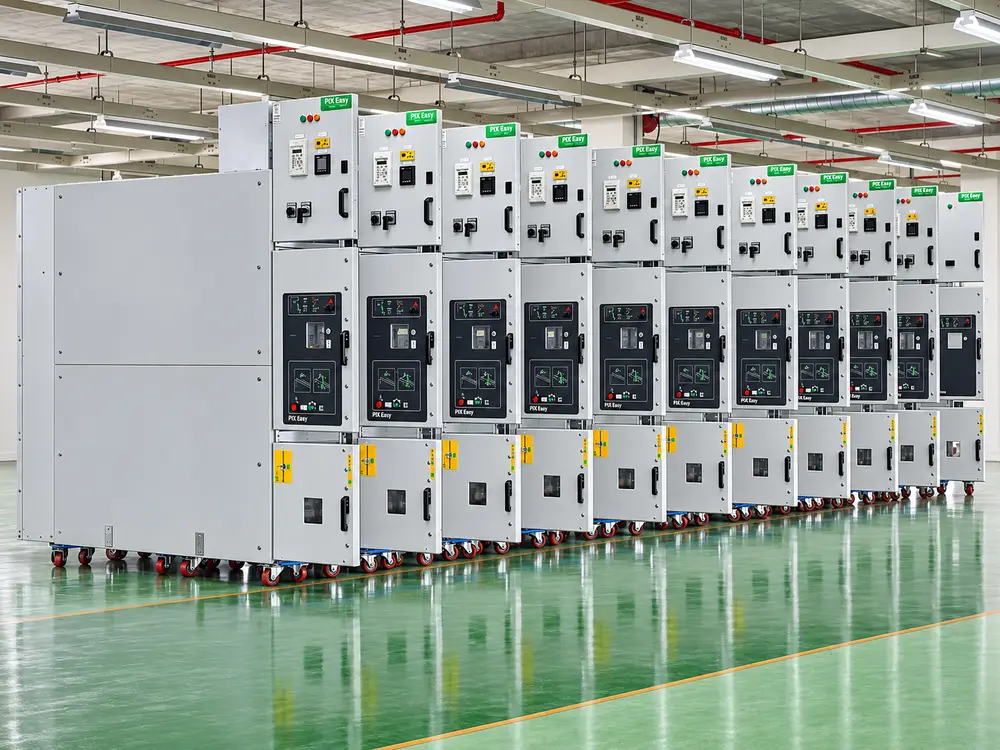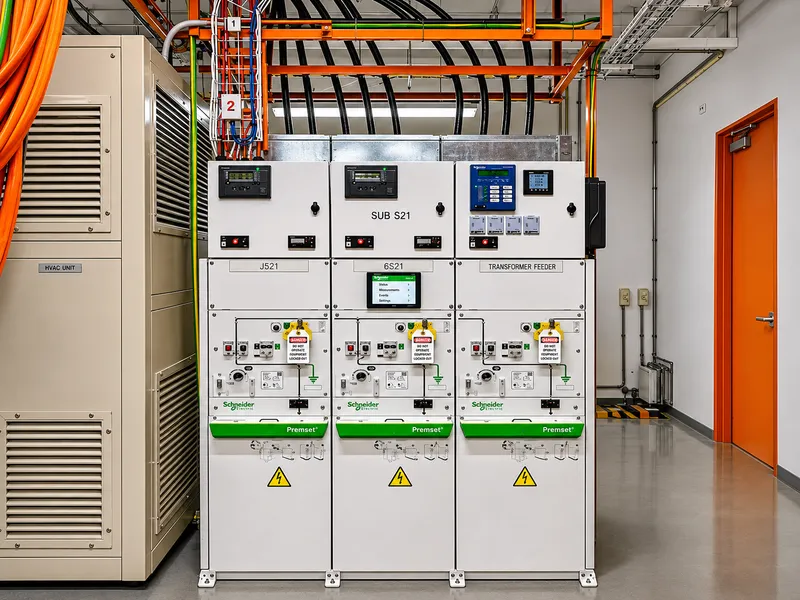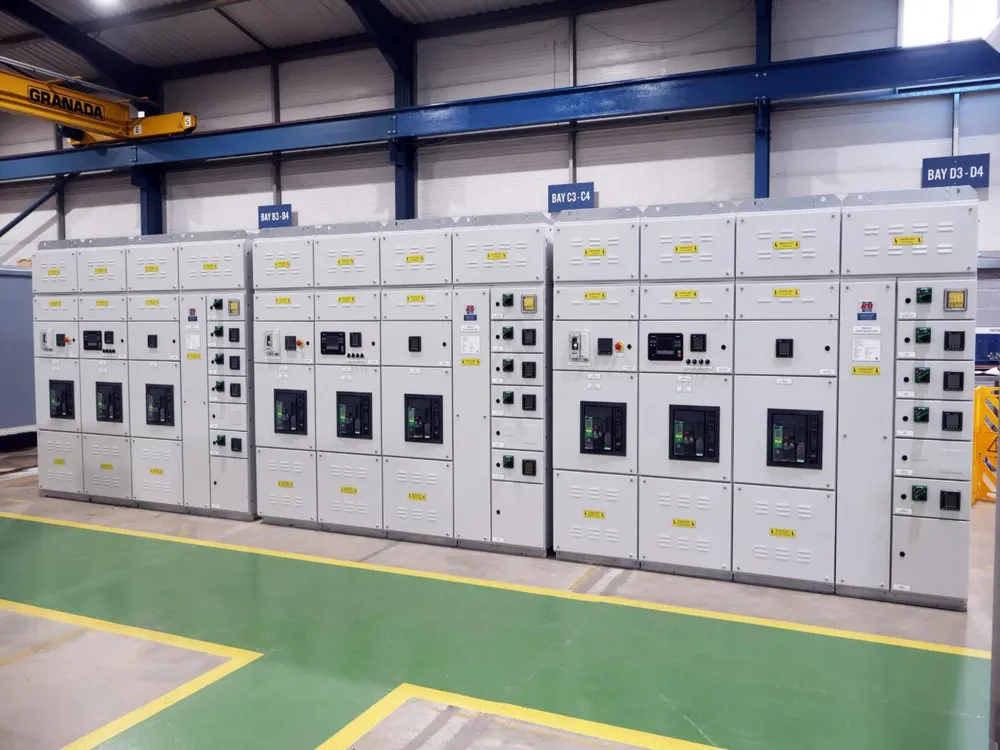
When purchasing low voltage switchboards, medium voltage switchgear and industrial electrical equipment, the IP protection rating is one of the key technical specifications engineers need to check.
IP4X, IP54 and IP65 may look similar, but they represent different levels of protection against solid objects, dust and water. Selecting an unsuitable protection rating can allow dust or moisture to enter the enclosure, potentially affecting insulation performance and causing electrical component failures.
IP ratings are defined under IEC 60529 and are used to evaluate the degree of protection provided by electrical enclosures against the ingress of solid objects and water.
IP4X provides protection against solid objects measuring 1 mm or larger but does not specify water protection. IP54 provides limited dust protection and resistance to water splashing, while IP65 offers dust-tight protection and resistance to water jets under specified test conditions.
This article explains the technical differences between IP4X, IP54 and IP65, their testing requirements and typical applications. It also provides practical guidance for engineers selecting suitable protection ratings for low and medium voltage switchgear.
If you are looking for industrial electrical equipment and power distribution solutions, visit the Funator homepage to learn more about our electrical equipment, industrial automation products and global project supply services.
You can also explore our [Industry & Standards] section for more technical articles covering IEC standards, electrical equipment specifications, switchgear construction and engineering selection guidelines.
1. What Is the IP Protection Rating for Switchgear?
IP stands for Ingress Protection. It is a classification system defined by IEC 60529 to describe the protection provided by electrical equipment enclosures against solid objects and water.
For low voltage and medium voltage switchgear, the IP rating is mainly used to evaluate how effectively the enclosure prevents external objects, dust and water from entering.
An IP code normally consists of the letters IP followed by two digits, such as IP54.
Each digit represents a different protection requirement:
- First digit: Indicates protection against the ingress of solid objects and access to hazardous internal parts.
- Second digit: Indicates protection against water ingress.
For example, in IP54:
- Digit 5: Dust protected. Limited dust ingress is permitted, provided it does not interfere with the normal operation or safety of the equipment.
- Digit 4: Protection against water splashing from any direction.
If a particular protection characteristic is not specified, the letter X can replace the corresponding digit.
Therefore, IP4X indicates that the enclosure has a specified level of protection against solid objects, while no water protection rating is declared.
It is important to understand that an IP rating only describes enclosure protection. It does not directly indicate insulation strength, short-circuit withstand capability, corrosion resistance or the overall electrical safety level of the equipment.
2. IP4X: Protection Against Solid Objects
IP4X is an enclosure protection rating primarily designed to prevent the ingress of solid objects. It is commonly found in indoor low voltage switchboards and some medium voltage switchgear.
2.1 Protection Against Dust and Solid Objects
The first digit 4 in IP4X indicates that the enclosure prevents solid objects measuring 1 mm or larger from entering.
Examples include:
- Metal wires.
- Small metal fragments.
- Other solid objects meeting the specified dimensional requirements.
This protection reduces the risk of larger foreign objects entering the enclosure and coming into contact with internal electrical components.
However, IP4X does not mean that the enclosure is completely dust-tight. Dust particles smaller than 1 mm may still enter.
IP4X should also not automatically be interpreted as complete finger protection against access to hazardous live parts. Additional access protection requirements and the equipment's internal construction must be considered.
2.2 Water Protection
The X in IP4X means that no water protection rating has been specified.
This does not necessarily mean that the equipment cannot come into contact with water. It means that IP4X alone cannot be used to confirm a defined level of water protection.
Therefore, IP4X is generally more suitable for dry, controlled indoor environments. It should not be installed in areas exposed to rain or water jets without additional protection measures.
2.3 Typical Applications
IP4X is commonly used in:
- Indoor electrical distribution rooms.
- Commercial building electrical rooms.
- Dry electrical equipment rooms in factories.
- Indoor switchgear installation areas without direct exposure to water or heavy dust.
For indoor industrial power distribution projects, engineers should also consider rated current, short-circuit withstand capacity and enclosure heat dissipation when selecting suitable Low Voltage Switchgear.
2.4 Key Characteristics
IP4X enclosures generally do not require the same level of sealing as higher-rated dust- and water-protected enclosures. This allows the design to be optimized according to equipment cooling and installation requirements.
However, compliance with IP4X must still be verified through the appropriate enclosure protection assessment. It cannot be determined by appearance alone.
3. IP54: Protection Against Dust and Water Splashing
IP54 is a commonly specified enclosure protection rating for industrial electrical equipment.
Compared with IP4X, IP54 provides additional dust protection and resistance to water splashing.
3.1 Dust Protection
The first digit 5 in IP54 indicates Dust Protected.
Some dust may enter the enclosure, but the quantity must not be sufficient to interfere with normal equipment operation or compromise safety.
This is particularly important in industrial environments where airborne particles are present.
For example, general manufacturing facilities may contain metal dust, fibers and other suspended particles.
If excessive dust accumulates on insulation surfaces or around electrical contacts, it may affect insulation performance or mechanical operation.
The enclosure design and sealing arrangements of IP54 equipment help limit dust ingress.
3.2 Water Protection
The second digit 4 in IP54 indicates protection against water splashing.
Under IEC 60529, the IPX4 test evaluates whether an enclosure can withstand splashing water from any direction without harmful effects.
This protection level is suitable for installation environments where:
- Occasional water splashes may occur around the equipment.
- Manufacturing areas experience occasional water exposure.
- Equipment may be exposed to incidental splashing rather than direct water jets.
However, IP54 does not mean that equipment can be cleaned directly with a water jet. It should not be treated as a universal protection rating for prolonged exposure to heavy rain.
3.3 Typical Applications
IP54 is commonly considered for:
- General industrial factories.
- Manufacturing workshops with moderate dust exposure.
- Sheltered or partially enclosed installation areas.
- Industrial distribution equipment exposed to occasional water splashing.
- Outdoor distribution equipment specifically designed and verified for IP54 protection.
3.4 Key Characteristics
IP54 provides a practical balance between dust protection, water protection and equipment cooling requirements.
Compared with higher-rated enclosures, its sealing structure may be less complex. However, engineers must still check door seals, cable entries, ventilation openings and operating mechanisms.
4. IP65: Dust-Tight Protection and Water Jet Resistance
IP65 provides a higher level of dust and water protection and is commonly used for outdoor electrical equipment and installations in dusty industrial environments.
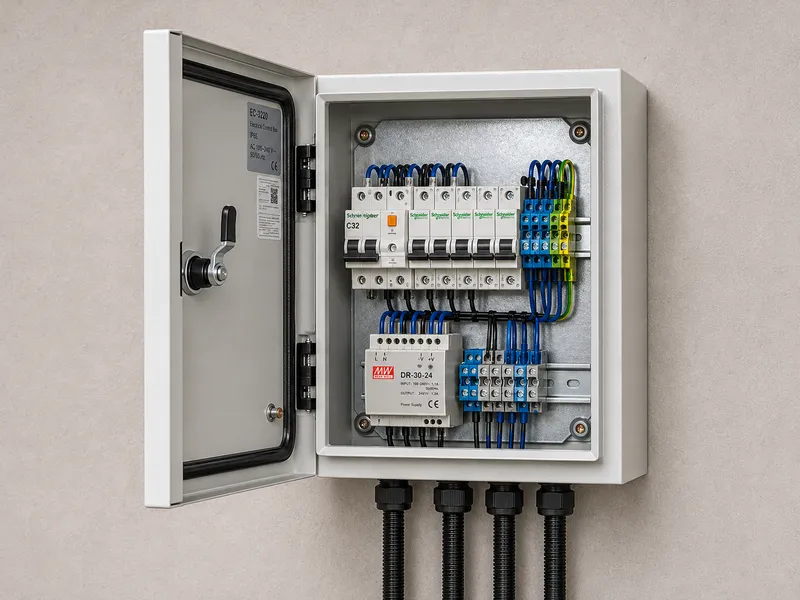
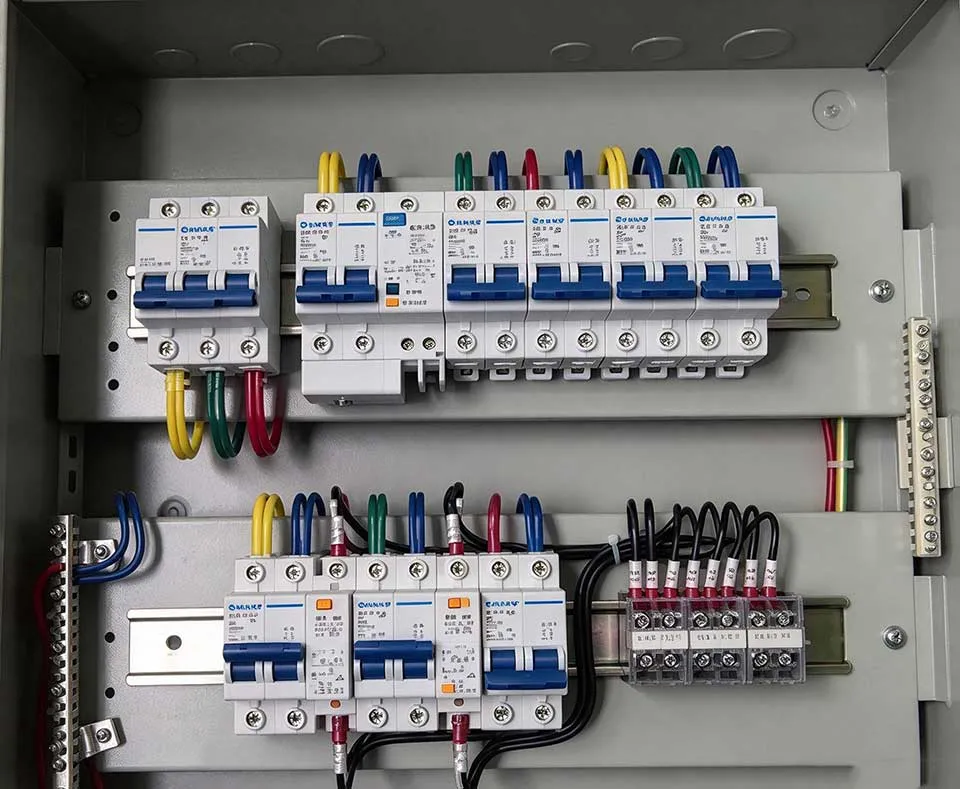
IP65 electrical enclosure with internal circuit breakers
4.1 Dust-Tight Protection
The first digit 6 in IP65 indicates Dust Tight.
Under the specified test conditions, no dust is permitted to enter the enclosure.
Compared with IP54, IP65 imposes stricter requirements on dust ingress and is suitable for equipment exposed to dusty environments over extended periods.
4.2 Water Jet Protection
The second digit 5 in IP65 indicates protection against water jets from any direction.
Under IEC 60529, the IPX5 test uses a nozzle with an approximate diameter of 6.3 mm and a water flow rate of approximately 12.5 L/min.
The test evaluates whether the enclosure can withstand water jets under specified conditions without harmful effects.
IP65 is suitable for installations where equipment may be exposed to rain, industrial water jets or cleaning water. However, it does not automatically mean that the enclosure can withstand high-pressure washing under any conditions.
IP65 also does not provide immersion protection. If equipment may be submerged, IPX7 or IPX8 should be considered according to the required immersion depth and duration.
4.3 Typical Applications
IP65 is commonly used for:
- Outdoor electrical control cabinets.
- Exposed industrial power distribution equipment.
- Manufacturing facilities with high dust levels.
- Industrial equipment requiring water jet protection.
- Electrical enclosures designed for demanding environmental conditions.
For coastal, salt-laden or chemical environments, additional consideration must be given to corrosion resistance, surface coatings, sealing materials and condensation control.
IP65 alone does not indicate salt spray or chemical corrosion resistance.
For outdoor substations, industrial parks and power infrastructure projects, the enclosure protection rating of [Medium Voltage Switchgear] should be selected according to site conditions, insulation requirements and operating environments.
4.4 Key Characteristics
IP65 places higher requirements on enclosure joints, door seals, cable glands, ventilation arrangements and operating mechanisms.
At the same time, increased enclosure sealing can make heat dissipation more challenging.
For high-current switchboards, engineers must verify both enclosure protection and temperature-rise performance rather than selecting the highest available IP rating without further assessment.
5. IP4X vs IP54 vs IP65: Key Differences
The main differences between IP4X, IP54 and IP65 relate to their protection against solid objects, dust and water.
| Comparison Item | IP4X | IP54 | IP65 |
|---|---|---|---|
| Solid Object Protection | Prevents objects of 1 mm and larger from entering | Dust protected | Dust-tight |
| Dust Protection | Limited; not fully dust-tight | Limits dust ingress | No dust ingress under specified test conditions |
| Water Protection | Not specified | Protection against water splashing | Protection against water jets |
| Water Test | Not specified | IPX4 | IPX5 |
| Typical Environment | Dry indoor areas | General industrial or sheltered areas | Outdoor and dusty industrial environments |
| Enclosure Sealing | Basic protection | Enhanced sealing | Higher sealing requirements |
| Thermal Design | Must be verified | Must be verified | Requires particular attention |
Note: IP4X does not mean that equipment cannot come into contact with water. It means that no water protection rating is declared. IP54 and IP65 also do not provide protection against every possible water exposure condition. Actual performance depends on the complete enclosure design and its verified configuration.
6. How to Choose the Right IP Rating for Switchgear?
Selecting the correct IP protection rating requires an assessment of the actual installation environment rather than simply choosing the highest available rating.
Choose IP4X for Controlled Indoor Environments
IP4X may be suitable when equipment is installed in dry indoor electrical rooms and is not exposed to water, excessive dust or direct environmental conditions.
For conventional indoor switchboards without additional water protection requirements, this level may be sufficient, subject to the project specification.
Choose IP54 for General Industrial Environments
IP54 is worth considering when equipment is installed in industrial environments where some dust or occasional water splashing is expected.
It offers a practical balance between dust protection, water protection and equipment design requirements.
Before selecting IP54, engineers should confirm whether the equipment will be installed indoors, outdoors under shelter or in an area exposed to direct water jets.
Choose IP65 for More Demanding Environments
IP65 should be considered when equipment requires dust-tight protection and resistance to water jets.
It is particularly relevant to outdoor electrical enclosures and industrial installations exposed to dust or regular cleaning operations.
However, IP65 is not automatically the best choice for every project. Higher sealing requirements may affect heat dissipation, enclosure dimensions and overall equipment cost.
7. What Should You Check When Purchasing IP-Rated Switchgear?
IP protection is only one part of switchgear selection. Engineers should also verify the following factors.
1. Complete Enclosure Protection
The declared IP rating should apply to the complete assembled enclosure, including doors, covers, cable entry points and other relevant openings.
Even if the enclosure itself has a high IP rating, incorrectly installed cable glands, ventilation openings or access covers may allow dust and water to enter.
2. Cable Glands and Cable Entry
Cable entry points are common locations where dust and water can enter an electrical enclosure.
Select suitable cable glands, sealing components and installation methods to maintain the required IP protection level.
For outdoor equipment, check the sealing arrangements for both top and bottom cable entries.
3. Heat Dissipation and Temperature Rise
Higher IP ratings generally require more effective enclosure sealing, which can reduce natural air exchange between the inside and outside of the cabinet.
For high-current switchboards, this may affect internal temperature distribution.
The manufacturer should verify temperature-rise performance based on the actual enclosure configuration and operating conditions.
4. Condensation and Humidity
A higher IP rating does not completely eliminate condensation.
When there is a significant temperature difference between the inside and outside of an enclosure, moisture may condense on internal surfaces.
Depending on the installation environment, engineers may need to consider anti-condensation heaters, humidity control devices or suitable ventilation arrangements.
5. Corrosion Resistance
IP54 and IP65 do not automatically indicate resistance to salt spray or chemical corrosion.
For coastal and chemical industry projects, additional requirements should be specified for enclosure materials, surface treatments, protective coatings and sealing materials.
6. Installation and Maintenance Conditions
The original IP protection level must be maintained after installation.
During maintenance, check whether doors, cable glands, covers and other sealing components have been correctly reinstalled.
Damaged seals or incorrectly installed accessories can reduce the actual enclosure protection performance.
Conclusion
IP4X, IP54 and IP65 are three different enclosure protection ratings defined under IEC 60529. They are used to evaluate the protection of electrical switchgear against solid objects, dust and water.
IP4X mainly prevents solid objects measuring 1 mm or larger from entering the enclosure but does not specify a water protection rating.
IP54 provides dust protection and resistance to water splashing from any direction.
IP65 provides dust-tight protection and resistance to water jets under specified test conditions.
For engineers and electrical equipment buyers, the correct IP rating should be selected according to the installation environment, dust exposure, water exposure, temperature-rise requirements and project specifications.
A higher IP rating is not necessarily the best choice for every switchboard. The complete enclosure design, cable entry arrangement, thermal performance and maintenance conditions must all be considered.
Funator supplies Schneider Electric low voltage and medium voltage distribution equipment, together with multi-brand industrial electrical components for global industrial, commercial and infrastructure projects.
Our team can assist with switchgear selection based on the required IP protection rating, rated voltage, rated current, short-circuit withstand capacity and installation conditions.
If you are sourcing IP54 or IP65 switchgear for industrial or outdoor applications, contact Funator with your project specifications or single-line diagram to discuss suitable equipment configurations and obtain a quotation.
You can also explore our Schneider Electric low and medium voltage distribution equipment portfolio for more product information and project supply support.