Introduction
An internal arc fault is one of the most severe failure conditions in medium voltage (MV) switchgear. It can occur due to insulation failure, loose electrical connections, foreign objects or defective electrical components. Once an arc develops, the released thermal energy rapidly increases internal pressure and temperature, potentially damaging the enclosure and endangering personnel.
When selecting medium voltage switchgear, engineers must consider more than rated voltage, short-circuit withstand current and insulation level. Internal arc protection is another critical factor in evaluating equipment safety.
IEC 62271-200 defines Internal Arc Classification (IAC) for metal-enclosed medium voltage switchgear. It evaluates the equipment's ability to provide personnel protection under specified internal arc test conditions.
Among the available classifications, IAC AFLR indicates that the switchgear has been tested for protection at the front, lateral sides and rear.
This classification is particularly relevant to indoor substations, industrial power distribution rooms, data centers and critical infrastructure projects.
Schneider Electric offers several medium voltage switchgear ranges, including PIX, SM AirSeT, GM AirSeT and SM6-24, with different internal arc protection configurations. The actual IAC rating must always be verified against the specific equipment configuration and its corresponding test documentation.
1. What Does IAC AFLR Mean?
IAC AFLR is a classification defined under IEC 62271-200. Each letter represents a specific technical requirement:
- IAC (Internal Arc Classification): Indicates that the switchgear has been evaluated through an internal arc test under specified conditions.
- A (Accessibility Type A): Intended for installations accessible only to authorized personnel.
- F (Front): Protection classification for the front side.
- L (Lateral): Protection classification for the lateral sides.
- R (Rear): Protection classification for the rear side.
For example, a switchgear specification marked:
IAC AFLR 20 kA 1 s
indicates that the equipment has been tested for internal arc protection at the front, lateral sides and rear, with a test current of 20 kA and a test duration of 1 second.
The two numerical values represent different test parameters:
- 20 kA: Internal arc test current.
- 1 s: Internal arc test duration.
Type A accessibility means that the installation is intended for authorized personnel only. It does not indicate unrestricted public access.
In Type A testing, indicator materials are positioned approximately 300 mm from the enclosure as part of the specified test arrangement. This measurement is not a universal installation clearance or a recommended safe working distance.
Compared with IAC AFL, IAC AFLR includes the rear side in the protection classification. This is important when personnel may access the space behind the switchgear.
2. How Does Internal Arc Protection Work?
When an internal arc occurs, a large amount of thermal energy is released within the switchgear compartment. This generates hot gases, rapidly increasing pressure and significant mechanical stress.
The purpose of an internal arc protection design is not to prevent every possible arc fault. Instead, it is to control the effects of the fault and reduce the risk of injury to personnel outside the enclosure.
Several engineering measures work together to achieve this.
2.1 Reinforced Enclosure Construction
The enclosure, doors and internal partitions are designed to withstand the mechanical pressure generated during the specified internal arc test.
During testing, correctly secured doors and covers must remain closed. The enclosure must also meet the applicable structural integrity and personnel protection criteria.
2.2 Pressure Relief System
An internal arc can cause a rapid increase in enclosure pressure. Medium voltage switchgear therefore commonly incorporates pressure relief flaps or dedicated exhaust ducts.
When internal pressure reaches the design conditions, the pressure relief system provides a controlled path for hot gases to escape.
Depending on the equipment design, exhaust gases may be directed upward, toward the rear or through dedicated exhaust ducts.
It is important to note that IAC AFLR does not mean every switchgear model uses upward pressure relief. The actual exhaust direction and installation requirements depend on the specific product design.
2.3 Mechanical Interlocking
Mechanical interlocking systems help prevent unsafe operating sequences.
For example, they can prevent the operation of an earthing switch when the circuit breaker is not in the permitted position, or restrict access to compartments under specified operating conditions.
These mechanisms reduce operational risks and human errors, but they do not replace the structural protection provided by an internal arc-rated enclosure.
2.4 Earthing and Compartment Design
Reliable earthing connections and properly designed compartments help maintain the required protective structure during an internal fault.
Compartment separation also helps define the equipment's internal configuration and supports subsequent inspection and fault investigation.
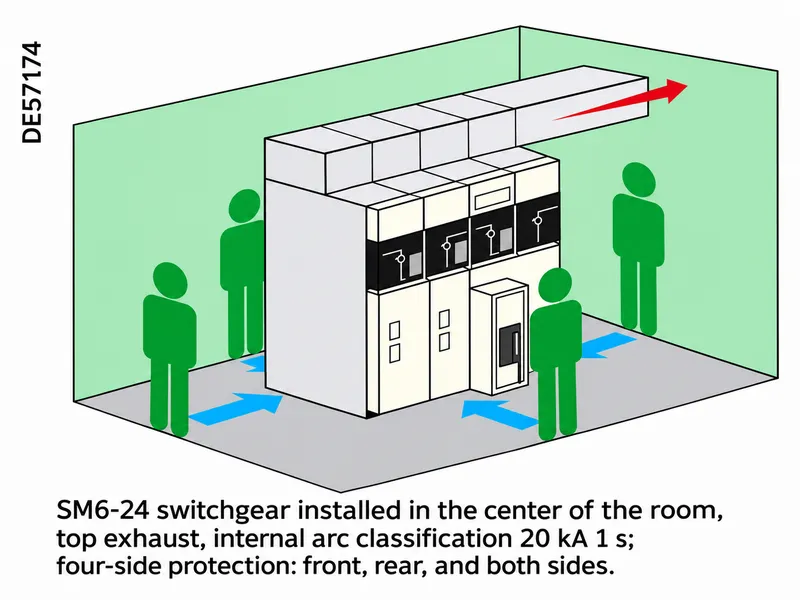 SM6-24 Indoor Switchgear Installation
3. What Does IEC 62271-200 Check During an Internal Arc Test?
IAC classification is not simply a test of enclosure strength. It involves a defined test arrangement and a set of evaluation criteria to assess personnel protection.
The main evaluation criteria include:
1. Doors and covers: Correctly secured doors and covers must not open during the test.
2. Enclosure integrity: No fragmentation that would endanger personnel is permitted.
3. Burn-through: No unacceptable holes must occur in the accessible sides of the enclosure within the specified evaluation area.
4. Indicator materials: Indicator materials must not ignite as a result of hot gases.
5. Earthing connection: The connection between the enclosure and its earthing point must remain effective in accordance with the applicable criteria.
These criteria evaluate how effectively the switchgear protects personnel outside the enclosure during an internal arc fault.
However, IAC classification does not mean that the switchgear will remain operational after an internal arc fault. It also does not mean that no hot gases will escape from the enclosure.
Its primary purpose is to verify personnel protection under the specified test conditions.
4. Why Is IAC AFLR Important for Medium Voltage Switchgear Installation?
The main difference between IAC AFL and IAC AFLR is whether the rear side is included in the internal arc protection classification.
- IAC AFL: Covers the front and lateral sides.
- IAC AFLR: Covers the front, lateral sides and rear.
This difference directly affects switchroom layout and equipment installation planning.
Engineers should pay particular attention to accessibility around the switchgear in the following applications:
- Indoor substations: Switchgear may be installed in the center of a room, with maintenance access behind the equipment.
- Industrial facilities: Operators and maintenance personnel may access the switchgear from multiple directions.
- Power generation plants: Electrical equipment must meet project-specific operational safety and maintenance requirements.
- Oil and gas and petrochemical facilities: Switchgear specifications often include detailed safety and compliance requirements.
- Data centers: Medium voltage distribution systems support critical loads and require carefully planned protection arrangements.
- Utility and infrastructure projects: Internal arc classification must be considered alongside substation layout and personnel access.
However, selecting IAC AFLR does not eliminate installation restrictions.
For switchgear with top-mounted pressure relief, sufficient space must be provided above the equipment. If a rear exhaust duct is used, the duct arrangement must follow the manufacturer's installation instructions.
Wall clearances, ceiling height, equipment positioning and exhaust routing must all be reviewed during the engineering and construction design stages.
5. Internal Arc Protection in Schneider Electric Medium Voltage Switchgear
Schneider Electric offers a range of medium voltage switchgear solutions for different voltage levels, distribution networks and industrial applications.
Different product families use different insulation technologies, switching arrangements, enclosure structures and pressure relief systems.
Therefore, engineers should not assume that every model within a product family has the same IAC rating.
5.1 Schneider Electric PIX
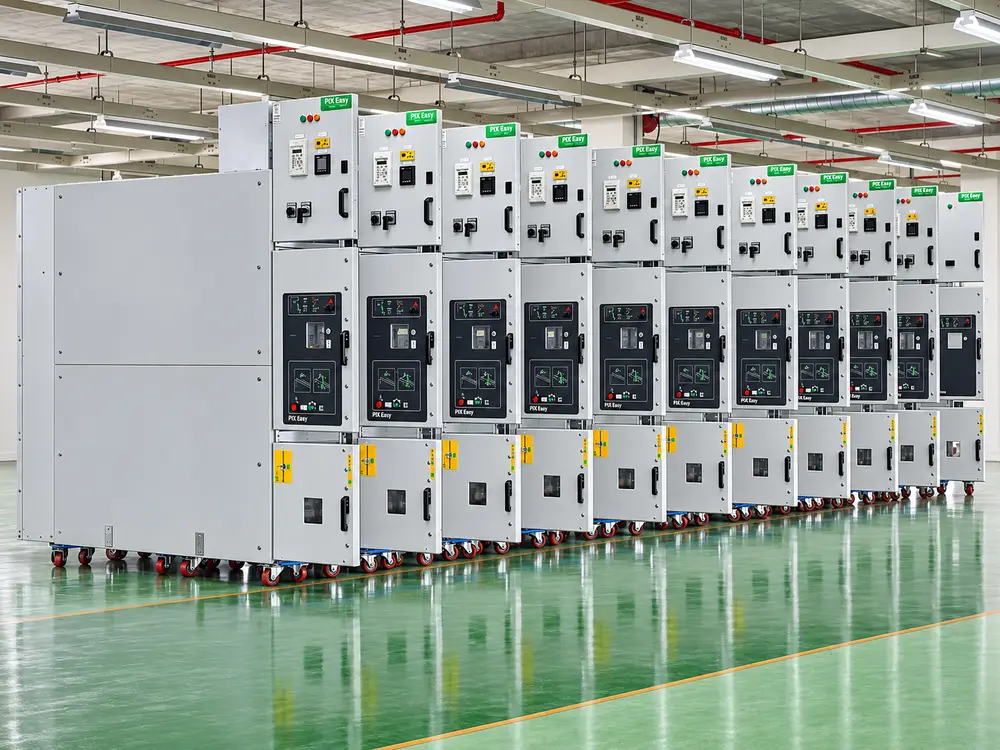
Schneider Electric PIX is an indoor air-insulated medium voltage switchgear range designed for primary power distribution.
It uses vacuum circuit breaker technology and is suitable for industrial power distribution, substations and utility infrastructure projects.
PIX supports different functional panel arrangements, including incoming feeder panels, outgoing feeder panels, bus section panels and voltage transformer panels.
Certain PIX configurations are available with IAC AFLR protection.
When specifying PIX switchgear, engineers should verify the rated voltage, short-circuit withstand level, internal arc test duration and pressure relief arrangement for the exact cubicle configuration.
5.2 Schneider Electric SM AirSeT
SM AirSeT is a modular medium voltage switchgear range designed for secondary distribution applications.
It uses pure air insulation and vacuum switching technology, avoiding SF6 as the primary insulation medium in the relevant configurations.
Depending on the selected cubicle and pressure relief arrangement, SM AirSeT offers different internal arc protection configurations.
For example, published technical documentation for certain SM AirSeT Advance configurations includes:
- IAC AFLR 16 kA, 1 s.
- IAC AFLR 20 kA, 1 s.
The applicable ratings must be confirmed against the exact product version and official technical documentation. Test results for one cubicle configuration should not automatically be applied to the entire product family.
5.3 Schneider Electric GM AirSeT
GM AirSeT is a medium voltage switchgear range designed for primary distribution applications.
It uses pure air insulation and vacuum switching technology and is intended for industrial facilities, energy infrastructure and power distribution systems.
Different GM AirSeT versions and configurations may have different internal arc protection arrangements.
Before purchasing, engineers should verify the exact IAC classification, rated arc fault current, test duration and pressure relief configuration.
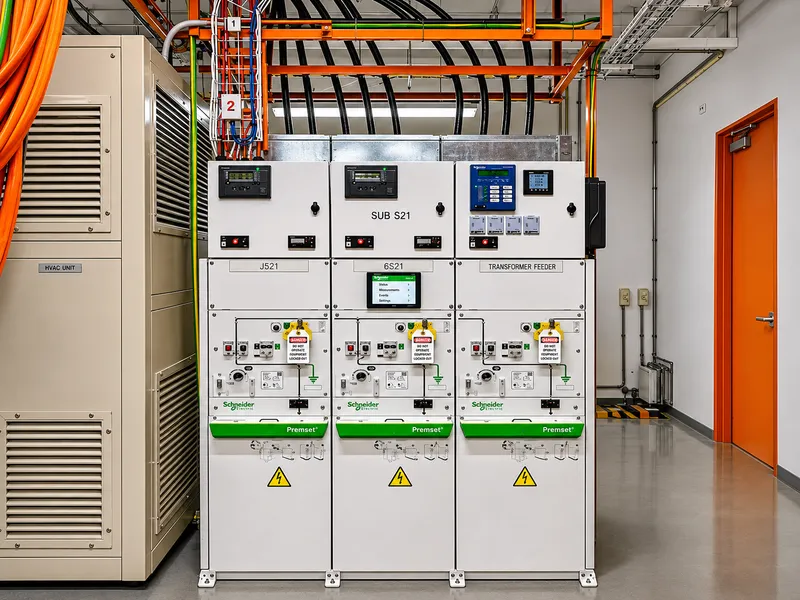
5.4 Schneider Electric SM6-24
SM6-24 is an established modular air-insulated medium voltage switchgear range for secondary distribution networks, with applications up to 24 kV.
Depending on the selected functional unit and equipment configuration, its technical documentation includes different internal arc protection options, such as:
- IAC AFL 12.5 kA, 1 s.
- IAC AFLR 12.5 kA, 1 s.
- IAC AFL and AFLR 16 kA, 1 s.
The actual available ratings must be checked against the relevant product model, functional unit and official type-test documentation.
These examples demonstrate that different configurations within the same brand or product family may have different internal arc protection capabilities.
Always compare the actual technical ratings rather than relying only on the product family name.
6. What Should Engineers Check Before Purchasing IAC AFLR Switchgear?
For projects requiring IAC AFLR medium voltage switchgear, engineers and procurement teams should clearly define the following requirements in their technical specifications and purchase documents.
1. Internal Arc Test Report
Request the manufacturer's internal arc test report or relevant type-test documentation demonstrating compliance with IEC 62271-200.
Check that the tested model, enclosure structure and configuration correspond to the equipment being offered.
2. Rated Arc Fault Current
Confirm that the tested internal arc current is appropriate for the prospective fault conditions at the installation point.
Do not confuse short-circuit breaking capacity with internal arc test current. These are different technical performance parameters.
3. Arc Duration
Verify the tested arc duration, such as 0.5 s or 1 s.
The selected rating should also be evaluated against the protection relay settings, circuit breaker operating time and actual system fault-clearing time.
4. Protection Directions
Confirm whether the equipment is classified as AFL or AFLR.
If personnel may access the rear of the switchgear, verify that the rear side is included in the required protection classification.
5. Pressure Relief System
Determine whether the equipment uses top exhaust, rear exhaust or a dedicated pressure relief duct.
Provide the required clearance and exhaust space according to the manufacturer's installation drawings.
6. Actual Equipment Configuration
Verify the rated voltage, busbar arrangement, functional panels, compartment design and accessories.
Test results for one configuration should not be applied to another configuration without confirmation from the manufacturer.
7. Installation Conditions
Before placing an order, review foundation dimensions, switchgear lineup arrangement, wall clearances, overhead space and exhaust duct requirements.
This helps ensure that the actual installation conditions comply with the manufacturer's requirements.
Conclusion
IAC AFLR is an important internal arc protection classification for medium voltage switchgear. It indicates that the specified equipment configuration has passed the relevant internal arc protection tests at the front, lateral sides and rear under defined test conditions.
For Schneider Electric PIX, SM AirSeT, GM AirSeT and SM6-24 switchgear, engineers should verify the actual arc fault current, test duration, accessibility category and pressure relief arrangement before finalizing equipment selection.
Selecting the correct IAC classification and following the manufacturer's installation requirements provide an additional layer of protection for electrical operators and maintenance personnel.
Funator supplies Schneider Electric medium voltage switchgear and multi-brand electrical equipment for industrial and infrastructure projects.
Our team can support product selection, technical document review and project quotations based on your rated voltage, short-circuit level, single-line diagram and installation requirements.
For technical specifications, product configurations or quotations for Schneider Electric PIX, SM AirSeT, GM AirSeT and SM6-24, contact Funator to discuss your project requirements.