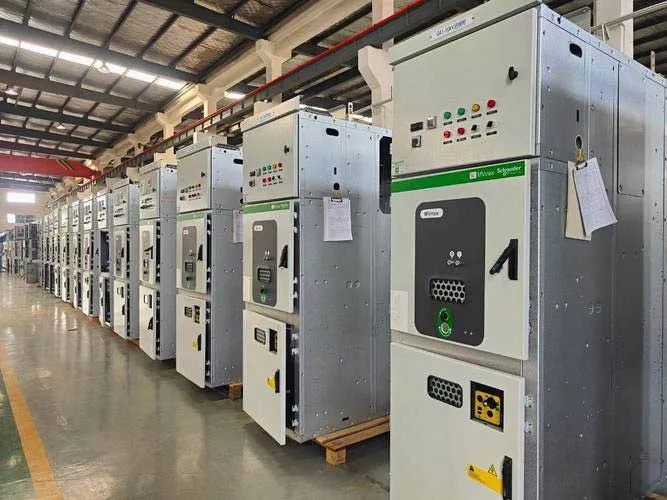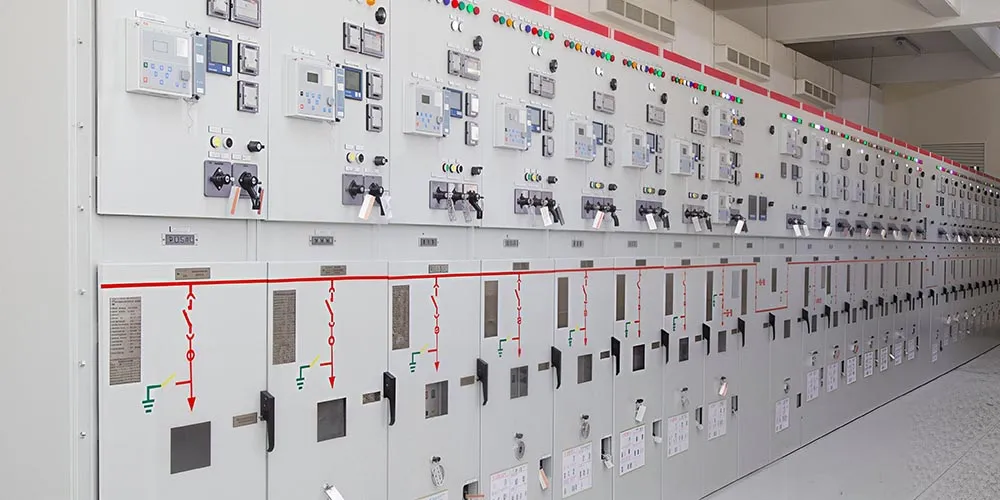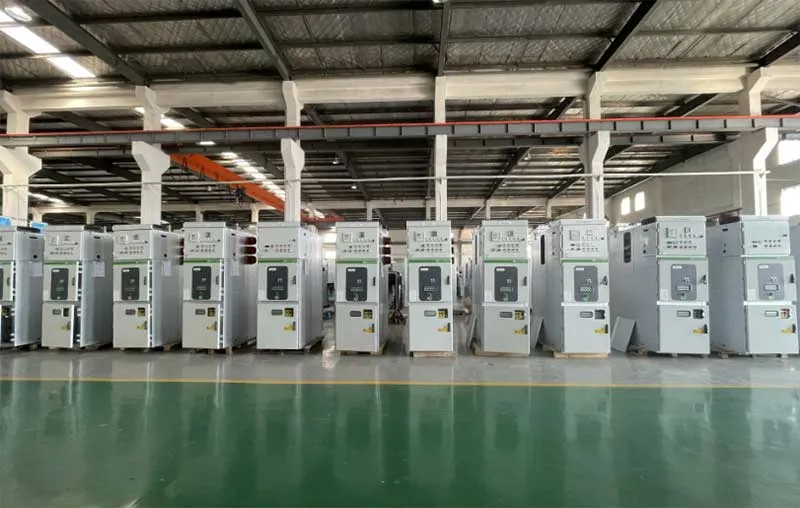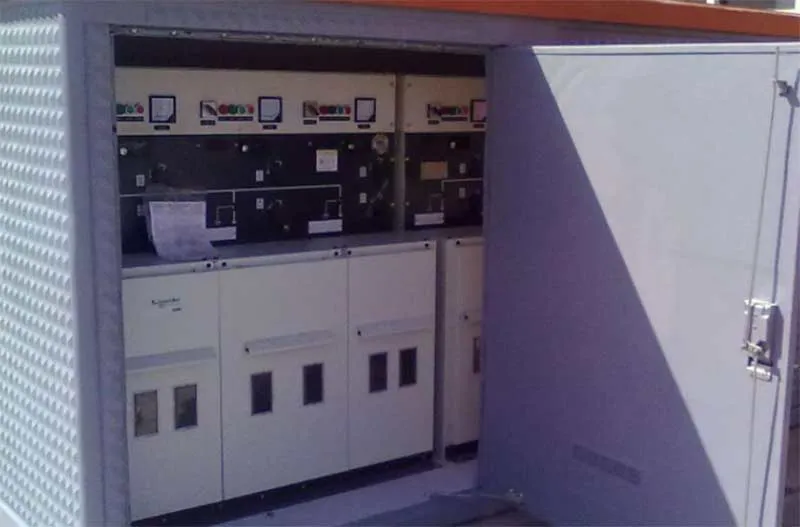
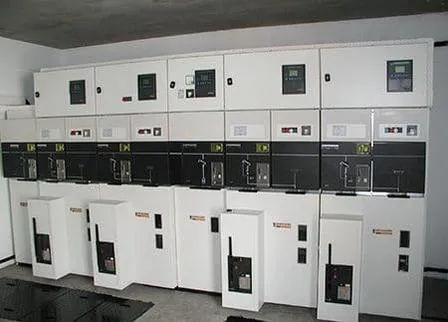
Schneider SM6 is a C-GIS (Cubicle-type Gas-Insulated metal-enclosed Switchgear). It typically employs vacuum circuit breakers, while components such as disconnectors and voltage transformers are sealed within an enclosure and insulated with sulfur hexafluoride (SF6) gas; other sections use conventional air insulation. The gas pressure within the SF6 compartment is relatively low, typically a fraction of that found in full GIS. SM6 operates as C-GIS equipment: aside from the sealed chamber housing the load break switch which is filled with SF6 gas, other components—such as the busbars and cable connections—rely on air as the insulating medium. It is suitable for indoor substations and switching stations.
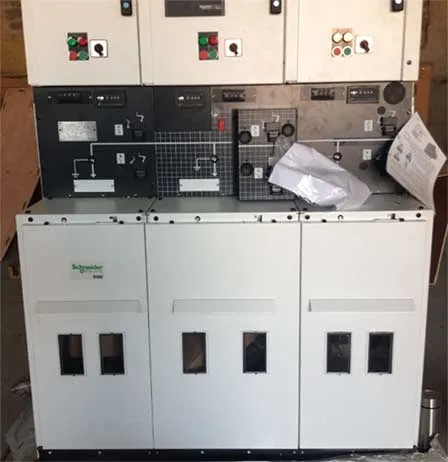
Schneider RM6 is a GIS (Gas-Insulated Switchgear / sulfur hexafluoride enclosed combined apparatus). It integrates circuit breakers, disconnectors, busbars, earthing switches, instrument transformers, bushings, or cable terminations into their respective sealed compartments, which are unified into an integrated enclosure filled with sulfur hexafluoride gas as the insulating medium. It offers advantages such as a compact structure, small footprint, light weight, immunity to atmospheric conditions, extended maintenance intervals, and the elimination of electric shock hazards and electrical noise interference. It is suitable for outdoor compact substations (package substations) and power distribution scenarios with harsh operating conditions, such as maritime, marine vessels, and underground substations.
Air-insulated ring main units (RMUs) are commonly referred to as semi-insulated RMUs, while gas-insulated ring main units are commonly referred to as fully insulated RMUs. The differences between SM6 and RM6 switchgear lie in the following aspects:
(1) Phase-to-phase clearance: With gas insulation, the phase-to-phase distance is only about one-third of that in air-insulated switchboards, significantly reducing the dimensions of the switchgear.
(2) Insulating medium of fully insulated RMUs: Gases such as SF6,N2, or their gas mixtures are used as the insulating medium, providing superior dielectric performance.
(3) Electrical clearance: Because insulating gas exhibits dielectric properties far superior to air, the electrical clearances in fully insulated cabinets are significantly smaller than those in semi-insulated cabinets.
(4) Equipment dimensions: Owing to the smaller electrical clearances, the overall dimensions of fully insulated cabinets are much smaller than those of semi-insulated cabinets of the same voltage rating, resulting in a substantially smaller footprint.
(5) Altitude impact: The main circuit components of a fully insulated RMU are housed inside a hermetically sealed gas compartment with constant internal pressure, rendering them unaffected by altitude and particularly suitable for high-altitude regions. The dielectric insulation performance of semi-insulated RMUs is directly affected by altitude; standard products are rated for installations below 1,000 meters, while higher altitudes require custom engineering.
(6) Pollution impact: Environmental contaminants cannot penetrate the sealed gas compartment of a fully insulated RMU, making it well-suited for heavily polluted and contaminated environments.