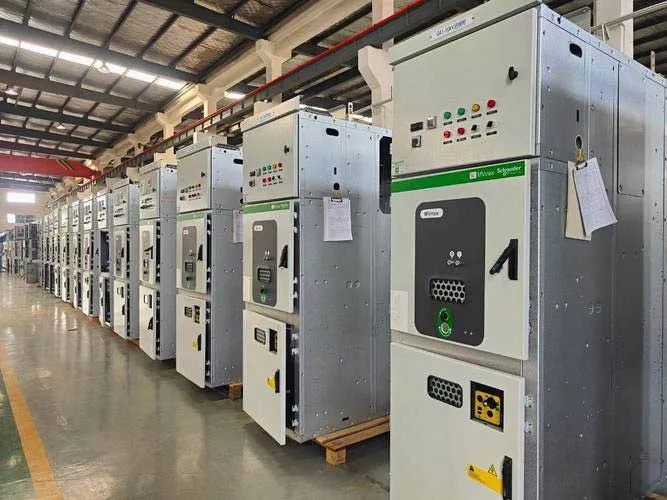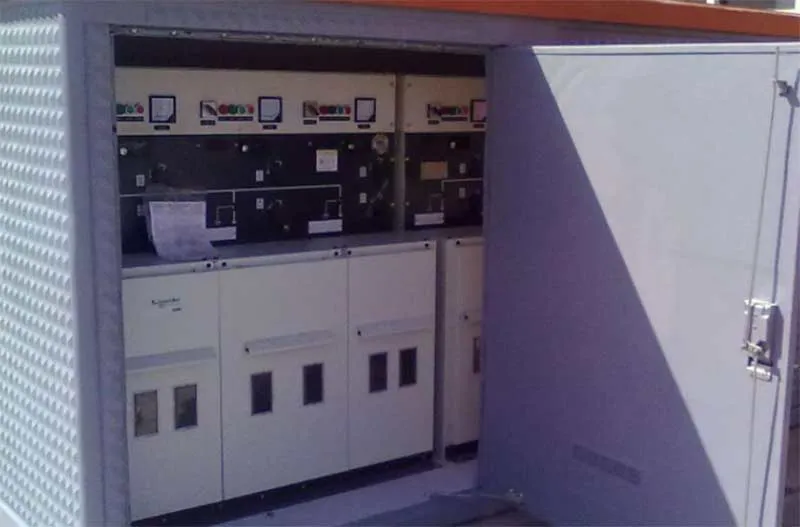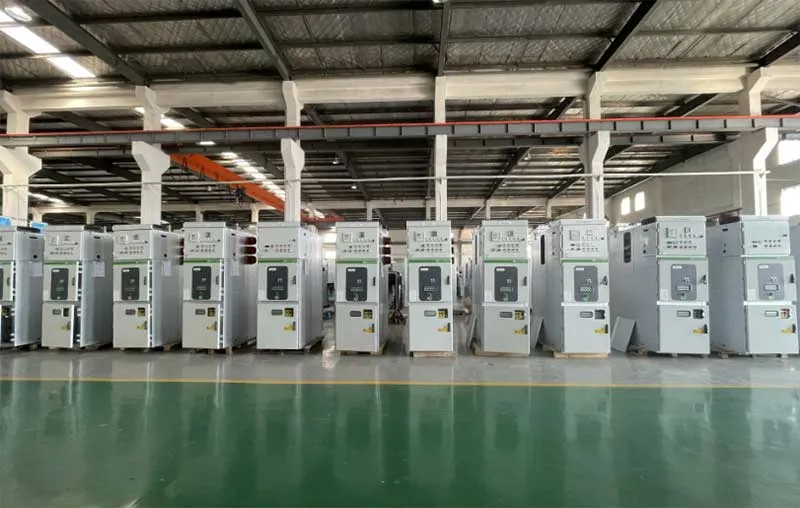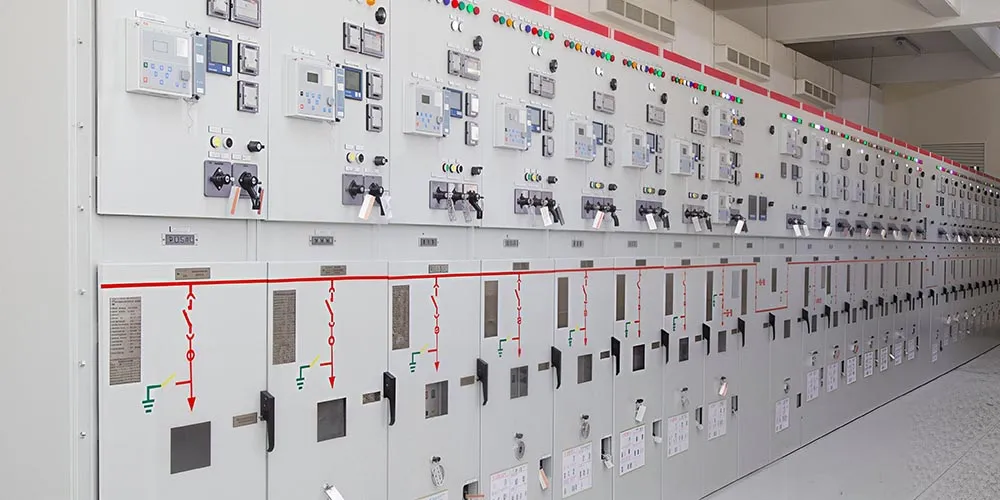
The overall cost structure of medium-voltage air-insulated switchgear is very clear; it primarily consists of four core components: the cabinet, busbars, circuit breaker drawout units, and secondary equipment. Prices vary significantly depending on the configuration, ranging from a few thousand dollars to hundreds of thousands of dollars, and many buyers easily fall into traps and waste money when selecting a model for the first time. Below, we’ll break down all the key factors that affect pricing and provide you with precise budgeting methods tailored to different scenarios.
I. Cost Breakdown of Core Components for a Single Cabinet
1. Cost of the Cabinet Body
The cabinet body serves as the basic framework of a switchgear, It is standard industry practice to bundle mechanical components—such as busbars, hinged doors, and mechanical interlocks—along with insulating components—such as contact boxes, wall bushings, and insulators—into a single cost calculation. However, many manufacturers also provide separate quotes for the insulating components. For example, a cabinet quoted at approximately $125 would cost only about $83 if the insulating components were excluded; the price difference primarily stems from the quality of the insulating components.
A standard, compliant switchgear cabinet typically requires six sheets of aluminum-zinc-coated steel, combined with three sheets of cold-rolled steel to fabricate the doors, covers, and mounting plates. The doors and covers also undergo electrostatic powder coating to ensure both aesthetic appeal and corrosion resistance. The price range for switchgear cabinets on the market varies significantly:
- High-Quality Enclosures: Approximately $125 per unit:These enclosures meet the requirements for protection against internal arc faults, feature a paint coating thickness that meets the C3 corrosion resistance rating, are equipped with quick-release door locks, and incorporate insulating components manufactured using high-quality materials and proven processes; the mechanical interlocks operate smoothly without any sticking.
- Low-Cost Cabinets: Less Than $70 Each: Cost reductions for low-priced cabinets come from two sources: On the one hand, advanced manufacturing reduces costs. Large cabinet manufacturers use a one-step forming process involving CNC punching of solid steel plates, eliminating the significant labor and time costs associated with traditional methods—such as shearing the plate and then punching holes or cutting along individual lines one by one—and further reducing costs through robotic bending processes; However, the vast majority of low-cost cabinets reduce costs by using inferior components. For example, a high-quality terminal box costs about $28 each, while a substandard one costs only $7–8; over the long term, this can easily lead to insulation breakdowns.
2. Cost of Bus Bars (Copper Bus Bars)
Copper busbars account for a significant portion of the total cost of switchgear and are directly correlated with the rated current: a standard 1,250 A circuit uses a single 80 × 10 mm copper busbar, while a high-current 3,150 A circuit requires three 100 × 10 mm copper busbars. A low-current single-circuit feeder cabinet typically requires 9–10 meters of copper busbar, whereas a high-current 3,150 A feeder cabinet requires as much as 30 meters of copper busbar alone.
Based on a market price of approximately $9,700 per metric ton for copper, the material cost for a 1-meter-long 80 × 10 mm copper busbar is about $70. For a standard 1,250 A feeder cabinet, the procurement cost of copper busbars alone is approximately $700; when factoring in processing losses, insulation wrapping, silver-plating of connectors, and other processes, the total cost reaches about $830. The total weight of the copper busbars in a 3,150 A circuit is approximately 270 kilograms, resulting in a material cost of about $2,600. Conventional switchgear manufacturers in the industry typically quote prices based on approximately $12.50 per kilogram.
Fluctuations in copper prices have a particularly significant impact on the total cost of high-current switchgear. It is essential to lock in copper prices in advance during procurement to avoid unexpected price increases that exceed the budget.
3. Cost of Circuit Breaker Drawout Units
Circuit breakers account for the largest portion of a switchgear cabinet’s cost, representing 40% to 60% of the total cabinet cost. Price differences between products of different brands and with different specifications are significant: a standard domestic 630A/25kA vacuum circuit breaker can be purchased for as low as $700–$830, while conventional products typically range in price from $1,400 to $4,200. Imported brands such as ABB, Schneider, and Siemens can reach $11,000–$21,000.
In actual selection, it is very reasonable to keep the price of a reliable domestic 1,250 A/31.5 kA circuit breaker within approximately $2,800. Many buyers specify circuit breaker brands or arc-extinguishing chamber manufacturers; however, the brand premium is often far higher than the actual cost difference between products. In non-core applications, there is no need to blindly pursue imported brands.
4. Secondary Equipment Costs
The price for basic, standard secondary configurations—excluding microprocessor-based protection devices—generally ranges from $140 to $280. These configurations primarily include conventional circuit control and monitoring components such as live display units, meters, terminal blocks, miniature circuit breakers, and changeover switches. If microprocessor-based protection devices are included, the price range widens significantly, ranging from $700 to $2,800; high-end microprocessor-based protection devices from leading domestic brands are typically available for around $1,100.
Special-purpose cabinets, such as voltage transformer cabinets and isolation cabinets, do not require circuit breakers or complex protection devices, so their overall cost is significantly lower than that of feeder-in and feeder-out cabinets.
II. Typical Cost Guidelines for Cabinets with Different Functions
Due to differences in configuration, the unit prices of medium-voltage switchgear with different functions vary significantly. Take the low-end domestic KYN28A-12 series as an example:
- Isolation Cabinet: Its core function is to provide a visible physical disconnect point to ensure safety during maintenance. It is equipped with isolation switches, grounding switches, and basic mechanical interlocks, with a unit cost of approximately $2,800–$3,500.
- Voltage Transformer Cabinet (PT Cabinet): Its core function is to convert the high voltage of the 10 kV busbar to 100 V low voltage to supply protection and metering instruments, and to monitor the insulation status of the busbar. It is equipped with voltage transformers, fuses, and surge arresters, with a unit cost of approximately $3,500–$4,200 per unit.
- Bus Tie Circuit Breaker Cabinet: Used for power sharing between two bus sections in a dual-power-source system; it works with protection devices to achieve rapid switching within ≤100 ms. It is equipped with a VS1-12 circuit breaker and a dual-power-source interlock controller. The cost per unit, including protection devices, is approximately $5,600–$7,000.
III. Framework for Estimating the Cost of Medium-Voltage Turnkey Systems
In addition to the core cabinet components, the total cost of the entire system must take into account five key factors, and the total price can vary by as much as several dozen times depending on the scenario:
- Cabinet Types and Quantities: The number of incoming cabinets, outgoing cabinets, bus tie cabinets, voltage transformer cabinets, and isolation cabinets directly determines the base total price.
- Circuit Breaker Parameters: Rated currents range from 630 A to 4,000 A, and short-circuit breaking capacity ranges from 25 kA to 50 kA; higher parameters result in higher prices.
- Brand Tier: There is a vast range in average unit prices among low-end domestic brands, high-end domestic brands, and international brands (ABB/Schneider/Siemens). The average unit price for low-end domestic brands ranges from $4,200 to $8,400; for high-end domestic brands, from $8,400 to $16,800; and for international brands, it can reach $21,000 to $42,000.
- Additional Smart Features: Adding online temperature monitoring, arc flash protection, and an energy management system will increase the total equipment cost by 15%–30%.
- Service Fees: Design, installation, and commissioning costs typically account for 15%–30% of the total equipment cost. Design fees for primary system diagrams and secondary control diagrams alone range from $7,000 to $21,000, while transportation and taxes account for 5%–10% of the equipment cost (including 13% VAT).
IV. Budget Guidelines for Various Typical Application Scenarios
Taking the conventional 10kV voltage level system as an example, the budget range of the entire system for projects of different scales is very clear:
- Small industrial/public building single power supply system
Configuration: 1 incoming cabinet+4 outgoing cabinets+1 voltage transformer cabinet+1 isolation cabinet. The total price of domestic low-end configuration is about $35000 (including installation and commissioning), suitable for non critical load scenarios such as small factories, ordinary commercial complexes, and school distribution rooms. - 2N Dual Power System for Medium sized Data Centers
Configuration: 2 incoming cabinets+1 busbar cabinet+6 outgoing cabinets+2 voltage transformer cabinets+2 isolation cabinets. The total price of domestic high-end configuration is about 210000 US dollars (including intelligent monitoring module), suitable for high reliability scenarios such as A-level data centers, tertiary hospitals, and financial core computer rooms. - Dual bus system for ultra large data centers
Configuration: 4 incoming cabinets+2 bus tie cabinets+12 outgoing cabinets+4 voltage transformer cabinets+4 isolation cabinets. The total price of international brand configuration can reach $1700000, suitable for large-scale data centers, high-speed railway traction substations and other first level load scenarios.
V. Guide to Optimizing a Low-Cost Budget
It is entirely possible to control the budget within a reasonable range through several techniques without sacrificing core reliability:
- On demand graded selection: High cost-effective domestic low-end cabinets can be used for non critical loads such as general lighting, while domestic high-end or international brand cabinets can be used for core circuits such as IT equipment and primary loads, without blindly upgrading the entire system to high-end ones.
- Modular design reserved for expansion: drawer type outgoing cabinets are selected, and during later expansion, only corresponding functional modules can be added without the need to replace the entire cabinet, avoiding repeated investment.
- Centralized procurement bargaining: For a single purchase of more than 10 units, directly negotiate a discount of 5% to 10% from the manufacturer. The bargaining space for domestic low-end brands will be greater.
- Keep the bottom line for critical circuits: Do not downgrade the performance of circuit breakers in core locations such as incoming cabinets in order to save costs. Incoming cabinet circuit breakers account for 80% of the overall system reliability, and the cost of subsequent failure losses will far exceed the saved procurement costs.